Grayanotoxin Poisoning: What Clinical Literature Documents About Mad Honey Toxicity
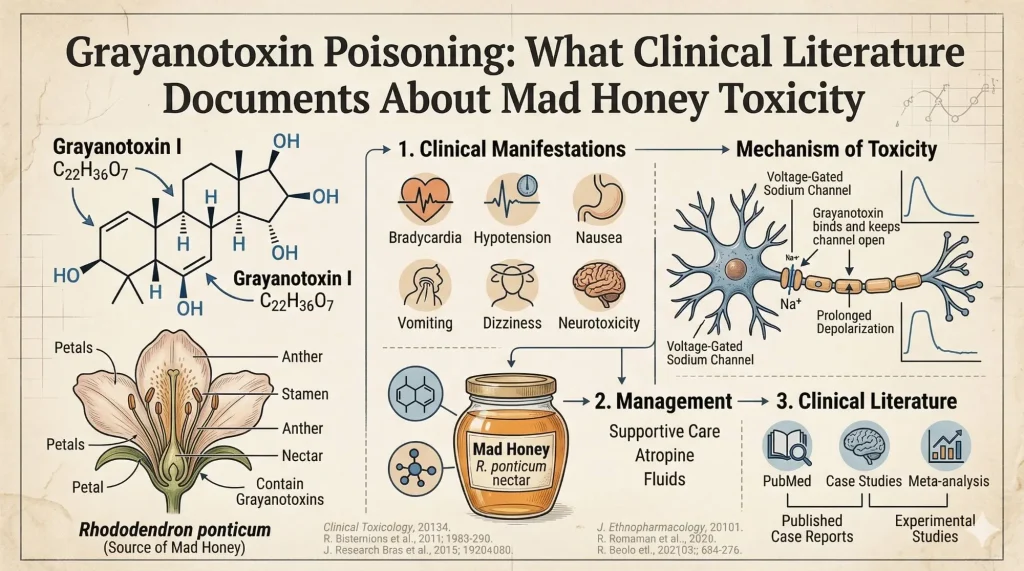
Medical disclaimer: This page summarizes published clinical literature for research and educational purposes. It is not medical advice, not a diagnosis tool, and not a substitute for emergency care. Anyone with symptoms consistent with grayanotoxin poisoning should seek medical attention promptly. The CMHI outline requires a standard safety disclaimer above the fold for this article […]
How Grayanotoxin Levels Are Measured in Mad Honey: What a 2022 LC-MS/MS Study Found About Batch Variation

Mad honey is often discussed as if it were one chemically stable product. This paper shows why that is misleading. In 2022, researchers developed and validated a liquid chromatography–tandem mass spectrometry (LC-MS/MS) method to quantify grayanotoxin I (GTX I) and grayanotoxin III (GTX III) in honey, then applied that method to 60 mad honey samples […]
The Ancient History of Mad Honey: From Warfare to Medicine

Introduction Mad Honey, with its intoxicating properties, is not a modern discovery. Its unique effects have been documented for millennia, weaving a rich tapestry of history that spans ancient warfare, traditional medicine, and even culinary curiosity. This post explores the fascinating historical journey of Mad Honey. Ancient Anatolia and the “Honey of Madness” The earliest […]
The Neuropharmacology of Grayanotoxins
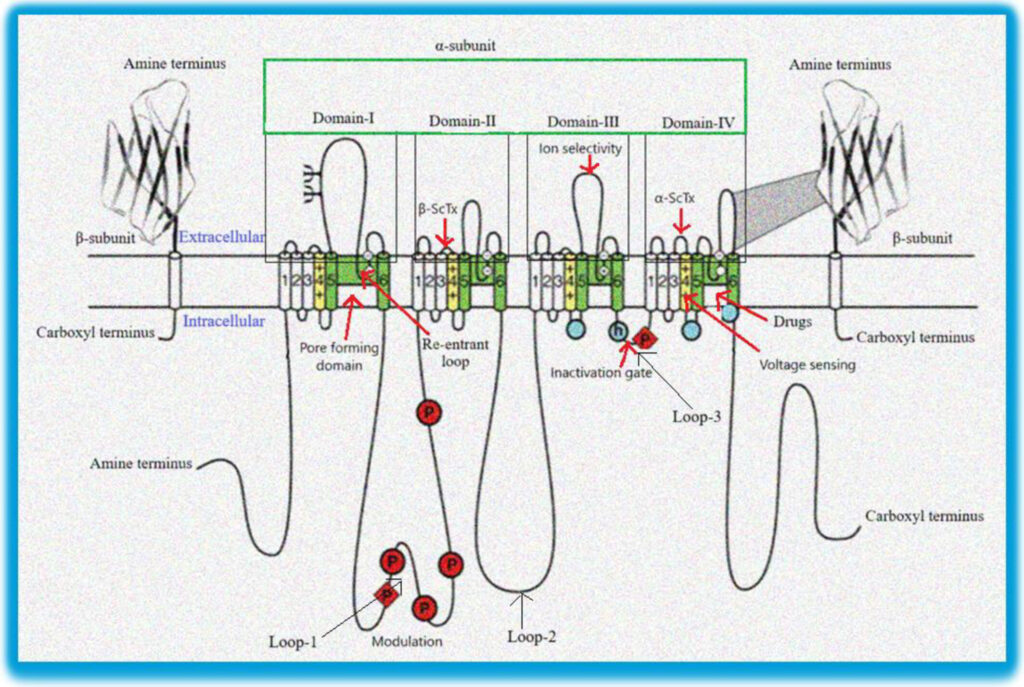
Introduction Mad Honey has captivated human interest for centuries, not just for its unique taste but for its potent, sometimes intoxicating, effects. At the heart of this phenomenon are grayanotoxins, a fascinating class of natural compounds. This post delves into the neuropharmacology of grayanotoxins, exploring how these molecules interact with our nervous system to produce […]
Mad Honey vs. Manuka Honey
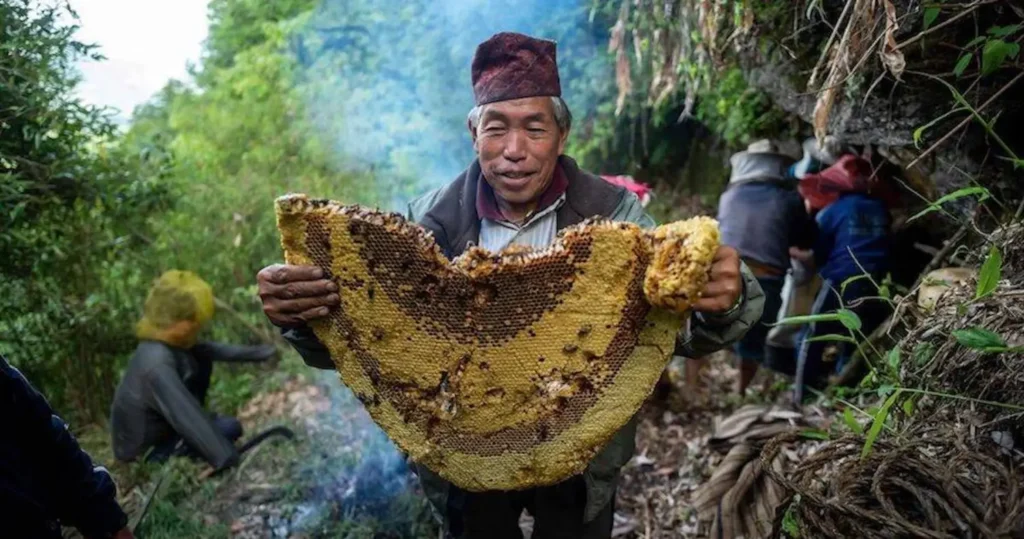
Summary This article compares and contrasts Mad Honey and Manuka Honey, two distinct types of honey often sought for their unique properties. While both are natural products with purported health benefits, their active compounds, origins, and traditional uses differ significantly. Botanical Origin and Active Compounds Mad Honey: Primarily sourced from the nectar of Rhododendron species, […]
Mad Honey Legal Status in Germany

Summary This article outlines the current legal framework surrounding the sale, import, and consumption of Mad Honey in Germany. While not explicitly banned, its classification as a food product with potentially toxic substances places it under strict regulatory scrutiny. Current Classification In Germany, Mad Honey is generally considered a foodstuff. However, due to the presence […]
The Physiological Impact of Mad Honey
Summary Mad Honey, due to its grayanotoxin content, exerts a wide array of physiological effects primarily by disrupting the normal function of voltage-gated sodium channels. This systemic review explores the impact of grayanotoxins on the cardiovascular, neurological, and gastrointestinal systems, providing insights into the clinical presentation and management of Mad Honey Poisoning. Cardiovascular System Grayanotoxins […]
What Are Grayanotoxins?
Summary Grayanotoxins (GTX) are a group of closely related neurotoxic compounds found in the nectar and pollen of certain plants belonging to the Ericaceae family, most notably Rhododendron species. These compounds are responsible for the characteristic psychoactive and toxic effects associated with Mad Honey. This article provides a comprehensive overview of grayanotoxins, their chemical structure, […]