

CliffMadHoneyIndex

─ Cliff Mad Honey Index

Science &
Toxicology

Understanding Grayanotoxins: the chemistry, pharmacology, and clinical science behind mad honey's effects.

Detailed ribbon model of grayanotoxin-binding protein structure in translucent blue on dark reflective surface

Welcome to the scientific core of the Cliff Mad Honey Index. This section publishes in-depth, evidence-based content on grayanotoxins, the unique compounds responsible for mad honey's distinctive effects. Our goal is to be the leading reference for researchers, medical professionals, and curious minds seeking to understand the complex pharmacology and toxicology of this fascinating substance.

All Articles

The Mad Honey Toxidrome: A Systems-Level Look at Cardiovascular and Neurological Effects
Science & Toxicology
The Mad Honey Toxidrome: A Systems-Level Look at Cardiovascular and Neurological Effects
A toxidrome is the recognizable cluster of signs and symptoms that a particular toxin, or class of toxins, reliably produces.…
Cliff Mad Honey Index Editorial Team
Jul 17, 2026
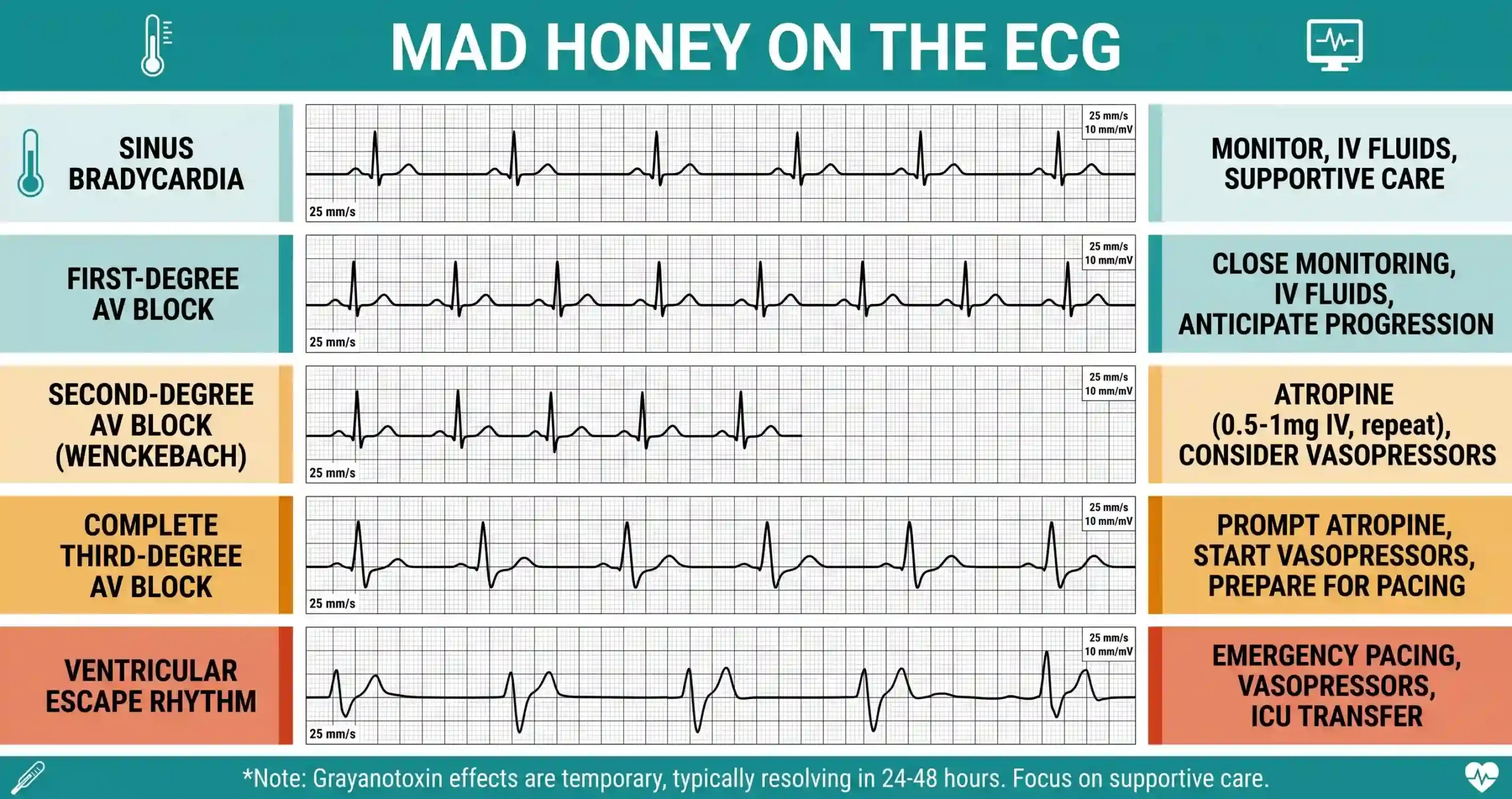
Mad Honey on the ECG: Bradycardia, AV Block, and What Clinicians See
Science & Toxicology
Mad Honey on the ECG: Bradycardia, AV Block, and What Clinicians See
Grayanotoxin poisoning is, above all, a cardiac conduction problem. The compound holds cardiac voltage-gated sodium channels open, amplifies vagal tone,…
Cliff Mad Honey Index Editorial Team
Jul 7, 2026
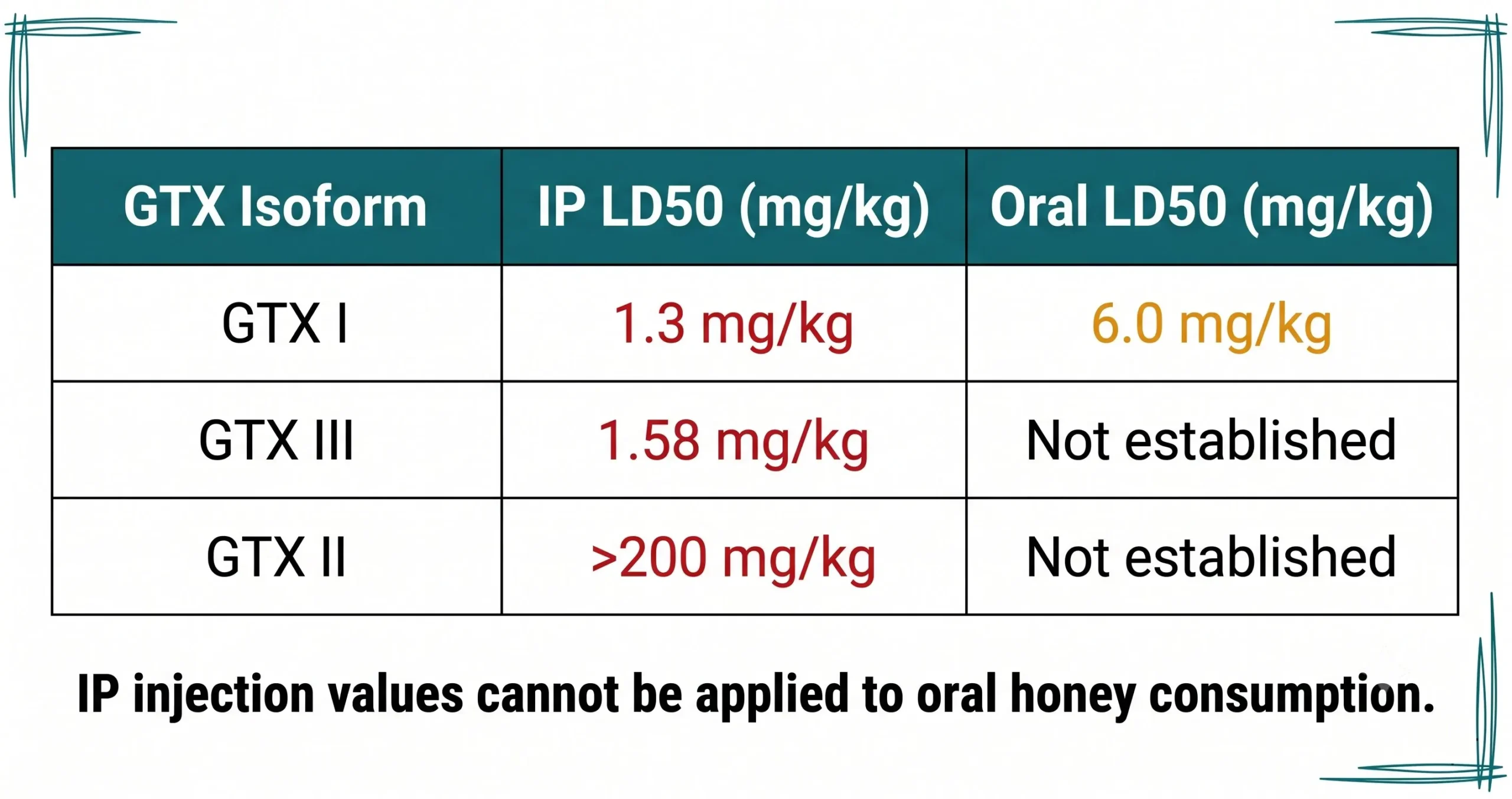
Grayanotoxin LD50: Lethal Dose Data, Route Effects, and What Animal Studies Cannot Tell You About Human Risk
Science & Toxicology
Grayanotoxin LD50: Lethal Dose Data, Route Effects, and What Animal Studies Cannot Tell You About Human Risk
The LD50, lethal dose 50 percent, is the amount of a substance required to kill 50 percent of a test…
Cliff Mad Honey Index Editorial Team
Jun 10, 2026
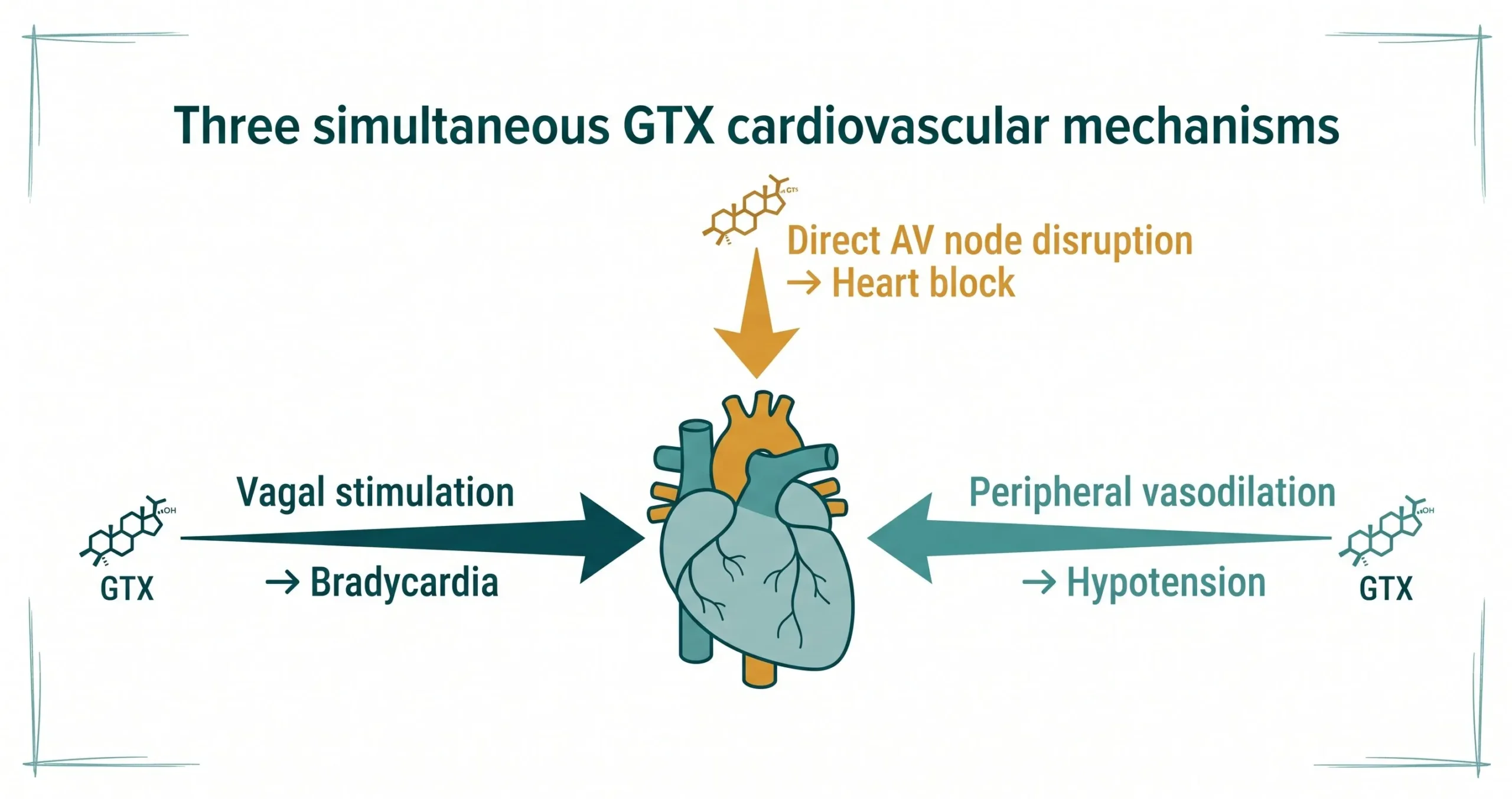
Mad Honey Cardiovascular Effects: Bradycardia, AV Block, and Hypotension Explained
Science & Toxicology
Mad Honey Cardiovascular Effects: Bradycardia, AV Block, and Hypotension Explained
Medical disclaimer: This article is for educational purposes. It is not medical advice. Anyone experiencing bradycardia, inability to stand, or…
Cliff Mad Honey Index Editorial Team
May 19, 2026
The Neuropharmacology of Grayanotoxins: Site 2 Sodium Channel Binding
Science & Toxicology
The Neuropharmacology of Grayanotoxins: Site 2 Sodium Channel Binding
Voltage-gated sodium channels (VGSCs) are the primary molecular targets of grayanotoxins. Understanding grayanotoxin pharmacology requires a foundational understanding of VGSC…

Dhurba Saud
Apr 22, 2026
The Physiological Impact of Mad Honey: Cardiac, Vascular and Neurological Effects
Science & Toxicology
The Physiological Impact of Mad Honey: Cardiac, Vascular and Neurological Effects
The physiological impact of mad honey is not confined to a single organ system. Grayanotoxins, by virtue of their action…
Dhurba Saud
Apr 22, 2026
What Are Grayanotoxins? Chemistry, Sources and Mechanism
Science & Toxicology
What Are Grayanotoxins? Chemistry, Sources and Mechanism
Grayanotoxins are a class of diterpenoid polyols, naturally occurring organic compounds characterised by a tetracyclic diterpene carbon skeleton bearing multiple…
Dhurba Saud
Apr 22, 2026
How Grayanotoxin Levels Are Measured in Mad Honey: What a 2022 LC-MS/MS Study Found About Batch Variation
Science & Toxicology
How Grayanotoxin Levels Are Measured in Mad Honey: What a 2022 LC-MS/MS Study Found About Batch Variation
Mad honey is often discussed as if it were one chemically stable product. This paper shows why that is misleading.…
Dhurba Saud
Mar 13, 2026