─ Frequently Asked Questions
FAQs
Answers to the most common questions about mad honey, grayanotoxins, safety, and this site.
Jump to Section
What Is Mad Honey?
What is mad honey?
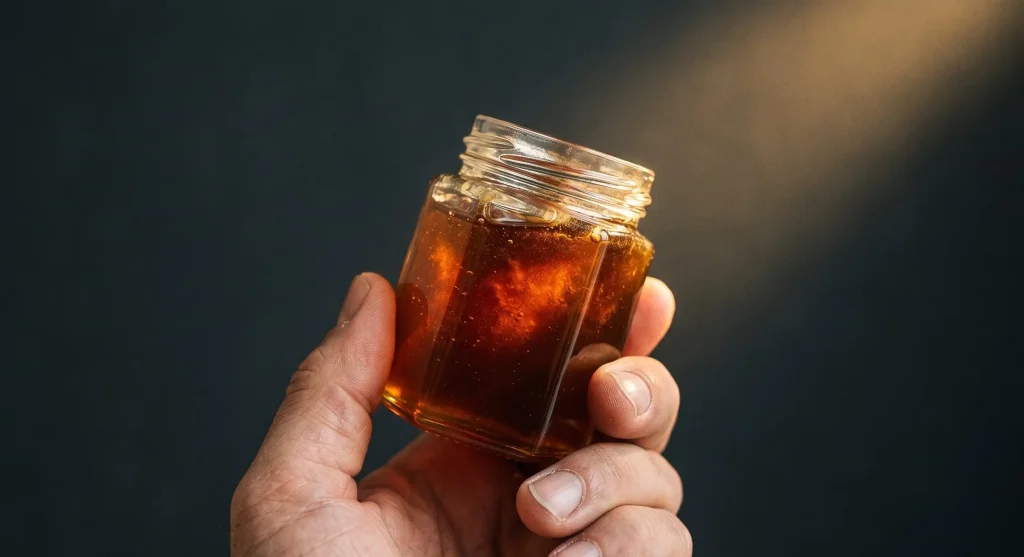
Mad honey is a type of honey produced when bees collect nectar from Rhododendron plants that contain grayanotoxin, a compound that disrupts sodium channels in nerves and cardiac muscle. At sufficient doses, it produces cardiovascular and neurological effects, including bradycardia, hypotension, dizziness, and tingling. It has been used for centuries in Turkey and Nepal for folk medicinal purposes and is increasingly sold internationally.
Why is it called 'mad' honey?
The word 'mad' refers to the unusual neurological and physiological effects it produces, such as dizziness, disorientation, and, in high doses, an inability to stand or function normally. These effects are caused by grayanotoxin disrupting sodium channel function in the nervous system and heart. In Turkish, it is called deli bal, literally 'mad' or 'crazy' honey. The name is documented in historical texts, including Xenophon's Anabasis (401 BCE), where an army was reportedly incapacitated after consuming it.
Where does mad honey come from?
The two primary origins are the Himalayan highlands of Nepal, where Apis laboriosa, the world's largest honeybee, forages from Rhododendron arboreum at altitude, and the Kaçkar Mountains of Turkey's Black Sea coast, where Apis mellifera forages from Rhododendron ponticum. Smaller quantities are produced in other regions where GTX-producing Ericaceae plants grow. Both Nepal and Turkey produce honey with wide batch-to-batch concentration variability.
Is all honey from Nepal or Turkey mad honey?
The primary GTX-producing species are Rhododendron arboreum and R. campanulatum in Nepal, and R. ponticum and R. luteum in Turkey. Not all Rhododendron species produce honey-transmissible grayanotoxin. The compound is concentrated in specific species at appropriate altitudes during the spring bloom. Other Ericaceae plants, including Kalmia (mountain laurel) and Leucothoe, also produce grayanotoxins but are not significant commercial mad honey sources.
Is mad honey the same as hallucinogenic honey?
Hallucinogenic honey is a widely used but pharmacologically inaccurate label. Grayanotoxin does not act on serotonin, dopamine, or any receptor system associated with classical psychedelics. The unusual effects (dizziness, tingling, and visual disturbances) are neurological consequences of cardiovascular disruption, not cortical receptor pharmacology. The label persists due to documentary framing and commercial incentive, not pharmacological evidence.
What is grayanotoxin?
Grayanotoxin (GTX) is a diterpenoid polyol produced by plants of the Ericaceae family, primarily Rhododendron species. It binds to voltage-gated sodium channels in their open state and prevents the normal inactivation step that terminates the electrical signal. Channels remain open, cells stay depolarised, and the cardiovascular and nervous systems lose normal electrical regulation. GTX I and GTX III are the primary toxic isoforms. GTX is not a serotonergic or dopaminergic compound.
Effects & Experience
What does mad honey actually do to the body?
Mad honey produces cardiovascular and neurological effects through GTX's disruption of voltage-gated sodium channels. Primary effects: bradycardia (slowed heart rate) and hypotension (lowered blood pressure). Secondary effects (dizziness, tingling spreading from the mouth outward, and visual disturbances) follow from reduced cardiac output and peripheral nerve disruption. Gastrointestinal effects, including nausea and hypersalivation, are also documented in the clinical case record.
Does mad honey get you high?
Not in the pharmacological sense that the question usually implies. Mad honey produces real physiological effects (dizziness, tingling, altered sensation, and slowed heart rate), but these are caused by cardiovascular disruption and sodium channel toxicity. There is no serotonin receptor involvement, no dopamine pathway, and no CNS receptor mechanism associated with any euphoriant or psychedelic compound. What is described as a 'high' is a collection of cardiovascular and neurological symptoms.
How long does it take for mad honey effects to start?
Symptoms typically begin within 15 to 60 minutes of consumption. Cardiovascular effects, bradycardia and hypotension, appear first, usually within 15 to 30 minutes. Neurological and gastrointestinal effects follow within 30 to 60 minutes. Onset timing depends on the amount consumed, the GTX concentration of the specific batch, and individual factors including body weight and food in the stomach.
How long do mad honey effects last?
Symptoms usually begin within minutes and up to five hours after eating, can last from a few hours to a few days, and patients generally recover within one to two days (EFSA CONTAM Panel 2023). Ullah et al. (2018) report onset from half an hour to four hours. In a review of 1,199 published cases, patients were generally discharged within 24 hours after recovery (Silici and Atayoglu 2015). In one study of 82 patients, symptoms began earlier and lasted longer in those aged 65 and over (Yaylaci et al. 2015).
What does mad honey feel like at a low dose?
At amounts well below the intoxication threshold documented in case reports, most people report little to no noticeable effect. Some describe mild tingling, slight warmth, or faint light-headedness. The sub-threshold experience has not been systematically studied; the clinical literature captures only presentations that required medical attention. Whether consistent low-dose effects exist at amounts below the clinical intoxication threshold is not established.
What does mad honey feel like at an intoxicating dose?
At amounts associated with intoxication in the clinical record, typically 15 to 30 grams, though batch concentration is the determining variable. Documented effects include significant dizziness and inability to stand, widespread tingling spreading from the mouth to the extremities, a noticeably slowed heart rate, nausea, possible vomiting, and blurred or double vision. The experience is primarily physical rather than perceptual or cognitive.
Can mad honey cause visual disturbances?
Yes, blurred vision and diplopia (double vision) are documented in the clinical case literature. These are caused by sodium channel disruption in the neurons controlling eye muscle coordination, compounded by reduced cerebral blood flow from hypotension. They are not hallucinations in any pharmacological sense. They are neurological symptoms of cardiovascular compromise.
Is mad honey a psychedelic?
No. Grayanotoxin has no documented action on serotonin receptors, dopamine receptors, NMDA glutamate receptors, or any of the molecular targets that define classical psychedelics, dissociatives, or entheogens. It is classified in clinical pharmacology as a Site 2 sodium channel toxin. The psychedelic label is a category error with no pharmacological basis.
Safety & Dosage
Is mad honey safe to consume?
Not in any unconditional sense. Mad honey contains grayanotoxin, a compound that slows the heart and lowers blood pressure, and at high doses causes cardiac conduction abnormalities. Whether a specific batch and amount is appropriate for a specific individual depends on the GTX concentration of the batch, the amount consumed, the individual's cardiovascular health, and their medications. No peer-reviewed safe dose exists across all individuals and batches.
What is a safe dose of mad honey?
No safe dose has been established. No published research has identified a human threshold below which grayanotoxin produces no cardiovascular effect, and grayanotoxin concentration varies widely between batches, so the same quantity of honey can represent very different exposures. The CMHI Safety Standard on mad honey dosage sets out what the evidence does and does not support.
Who should not consume mad honey?
People with cardiac arrhythmias, structural heart disease, sick sinus syndrome, or bradycardia should avoid mad honey. Those taking beta-blockers, calcium channel blockers, digoxin, antihypertensives, or other cardiac medications face documented pharmacodynamic interaction risk. Pregnant or breastfeeding individuals, the elderly, and anyone under 18 are also advised to avoid it. Anyone without a batch-specific COA confirming GTX concentration should not consume it without appropriate caution.
Can mad honey affect your heart?
Yes, the cardiovascular system is the primary target. GTX slows the heart rate through vagal overstimulation and direct disruption of cardiac conduction tissue. It also causes hypotension through peripheral vasodilation and reduced cardiac output. In severe cases, it produces AV block, impaired electrical conduction between the atria and ventricles. These effects are dose-dependent and reversible with treatment.
Can mad honey be addictive?
No evidence of addiction or physical dependence is documented in the peer-reviewed literature. GTX does not act on dopaminergic reward pathways. There is no case record of withdrawal symptoms, tolerance development, or compulsive use patterns meeting clinical criteria for substance use disorder.
Does starting with a small amount make mad honey safe?
No. 'Start low' is advice that circulates among sellers and users: take a small amount and wait before taking more. No study has tested it, and it does not make any amount safe. Grayanotoxin content varies widely between batches (in the Nepal samples where Ahn et al. 2022 detected it, GTX I ranged from 0.75 to 64.86 µg/g) and is not evenly spread within a single honey (Ullah et al. 2018), so the same small amount can carry very different doses. Symptoms can take up to five hours to appear (EFSA 2023), so feeling nothing at first does not mean nothing will happen, and a reaction to one jar says nothing about the next. CMHI does not give amounts to take; the dosage page explains why no safe dose has been established.
Does mad honey interact with blood pressure medications?
Yes, documented interaction risk exists with beta-blockers, calcium channel blockers, and antihypertensives. GTX produces bradycardia and hypotension through specific pharmacological pathways; these drug classes affect the same cardiovascular parameters through different mechanisms. Their combined effect is additive or greater, meaning a dose that produces mild effects in an untreated person can cause clinically significant bradycardia in someone on these medications.
What is a microdose of mad honey?
No validated microdose protocol for mad honey exists in the peer-reviewed literature. The concept borrows a framework from classical psychedelic microdosing that does not map onto GTX pharmacology. GTX's dose-response for cardiovascular effects is steeper than for classical psychedelics, and batch concentration variability means the same volume from different jars delivers radically different GTX exposures.
Can mad honey kill you?
Deaths from standard grayanotoxin poisoning treated with modern emergency care are rare. The clinical literature documents full recovery in the substantial majority of cases with atropine and IV fluids. Untreated severe complete AV block carries a genuine cardiac risk. A 25.8% fatality figure sometimes cited in connection with mad honey refers to a specific cluster involving a different honey source in China and must not be applied to standard Rhododendron-derived grayanotoxin poisoning. None of the 73 people in CMHI's Mad Honey Poisoning Case Log, every one treated and publicly reported since 2010, is recorded as having died; most poisonings are never reported, so the log cannot give a death rate.
What is the CMHI GTX risk band framework?
The GTX risk band framework classifies mad honey batches by total grayanotoxin concentration (mg/kg measured by LC-MS/MS) into Low, Moderate, and High bands derived from the clinical case literature. Each band has associated consumption context guidance. A batch's risk band is only determinable from a COA; it cannot be estimated from appearance, taste, origin, or price.
Poisoning & Emergency
What are the symptoms of mad honey poisoning?
The classic clinical triad is bradycardia (slowed heart rate), hypotension (low blood pressure), and dizziness, appearing within 15 to 60 minutes. Additional symptoms include tingling and paraesthesia spreading from the mouth outward, nausea, vomiting, hypersalivation, and visual disturbances. In severe cases: AV block, atrial fibrillation, syncope, and loss of consciousness. Most cases resolve within 24 hours with treatment.
What happens if you eat too much mad honey?
Overconsumption produces mad honey poisoning, characterised by bradycardia, hypotension, dizziness, nausea, vomiting, and in severe cases complete AV block requiring atropine or temporary cardiac pacing. Symptoms typically appear within 15 to 60 minutes and resolve within 24 hours with appropriate treatment. Anyone experiencing significant bradycardia, inability to stand, or syncope after consuming mad honey should seek emergency medical attention immediately.
How do I know if I have had too much?
There is no amount or reading that marks 'too much'; the warning signs are the effects themselves. Those recorded most often in published cases are a slow heart rate, dizziness or near-fainting, nausea and vomiting, sweating, and tingling around the mouth and in the limbs (Silici and Atayoglu 2015; Ullah et al. 2018). Anyone who has eaten mad honey and has a slow heartbeat, feels faint, cannot stand, loses consciousness, or has chest pain or breathing difficulty should get emergency care. Symptoms can appear up to five hours after eating (EFSA 2023), so feeling well at first is not reassurance.
What should I do if I think I am experiencing mad honey poisoning?
Stop eating it and get help. Contact your local poison control centre or emergency services, and call emergency services straight away for a slow heartbeat, faintness, inability to stand, loss of consciousness, chest pain or breathing difficulty. Tell the clinician what you ate and when: mad honey poisoning is diagnosed from that history and the clinical findings, and there is no commercially available laboratory test for it (Ullah et al. 2018). Folk remedies such as salty buttermilk are not treatments and should not delay care. In published cases treatment is supportive, with IV saline and atropine (Ullah et al. 2018), and patients generally recover within one to two days (EFSA CONTAM Panel 2023).
How is mad honey poisoning treated at the hospital?
Treatment is atropine sulphate to reverse bradycardia and AV block, and IV saline to address hypotension. Most cases respond within hours. In severe complete AV block not responding to atropine, temporary transvenous pacemaker insertion provides cardiac support until grayanotoxin clears. Full recovery without permanent cardiac sequelae is the norm for single-episode GTX poisoning.
What heart rate after consuming mad honey requires medical attention?
No validated heart-rate cut-off exists, so this page does not set one. A slow heart rate is the most common finding in published cases: Silici and Atayoglu (2015) recorded sinus bradycardia in 79.6 percent of 1,199 cases, and the most frequent complaints were dizziness, nausea and near-fainting. Do not wait for a particular number. Anyone who has eaten mad honey and has a slow heartbeat, feels faint, cannot stand, loses consciousness, or has chest pain or breathing difficulty should get emergency care, and anyone who feels unwell should contact a poison centre or emergency services.
How long does it take to recover from mad honey poisoning?
With treatment, most people recover within a day or two. The EFSA CONTAM Panel (2023) reports that symptoms can last from a few hours to a few days and that patients generally recover within one to two days. In a review of 1,199 published cases from 1981 to 2014, Silici and Atayoglu (2015) found that patients were generally discharged within 24 hours after recovery and that no deaths were reported. In one study of 82 patients, recovery took longer in those aged 65 and over (Yaylaci et al. 2015).
Science & Mechanism
How does grayanotoxin work?
GTX binds to voltage-gated sodium channels in their open state and prevents the normal inactivation step that terminates the electrical signal within milliseconds. This locks the channel open and holds the cell in sustained depolarisation. In cardiac tissue, this disrupts the precisely timed signals that coordinate the heartbeat. In neurons, it produces abnormal firing patterns causing tingling, dizziness, and other neurological symptoms.
Why does mad honey slow the heart rate?
GTX produces bradycardia through two simultaneous mechanisms: amplification of vagal (parasympathetic) tone that slows SA node firing, and direct sodium channel disruption in cardiac conduction tissue. The vagal pathway is dominant in most cases, confirmed by the fact that atropine, which blocks vagal signalling at the heart, reliably reverses the bradycardia in the majority of documented presentations.
Why does atropine treat mad honey poisoning?
Atropine is a competitive antagonist at M2 muscarinic receptors at the SA and AV nodes, the same receptors through which GTX amplifies vagal tone. By blocking these receptors, atropine counteracts the vagal overstimulation and restores normal heart rate and AV conduction in most cases within minutes of IV administration.
Is there therapeutic potential in mad honey?
Animal studies document potential therapeutic effects, including blood pressure reduction, blood glucose lowering, fracture healing enhancement, and anti-epileptiform activity. No peer-reviewed clinical trial has evaluated any therapeutic application of mad honey or grayanotoxin in humans as of 2025. The animal evidence establishes pharmacological plausibility, not clinical efficacy.
What is the difference between GTX I and GTX III?
GTX I and GTX III are the two primary toxic isoforms in mad honey. Both act on voltage-gated sodium channels but differ in their primary cardiac effects. GTX I predominantly affects SA and AV nodal conduction. GTX III is associated with triggered activity in cardiac Purkinje fibres and arrhythmia risk. Turkish honey often shows higher relative GTX III; Nepal honey shows more variable isoform ratios between batches.
Is there peer-reviewed research on mad honey?
Yes. The peer-reviewed literature includes a systematic review of 1,199 clinical cases (Silici and Atayoglu 2015), LC-MS/MS analytical studies measuring GTX concentration, established mechanistic pharmacology research, and the 2025 comprehensive review from Tribhuvan University, Nepal (Aryal 2025). The evidence base is strong for the mechanism and clinical management. Controlled human dose-response data and human therapeutic trials do not yet exist.
Nepal & Turkey Origins
What makes Himalayan mad honey different?
Himalayan mad honey is produced by Apis laboriosa, the world's largest honeybee (a wild cliff-nesting species that cannot be kept in conventional hives) foraging from Rhododendron arboreum at altitude in Nepal. All Apis laboriosa honey is wild-harvested. The spring harvest concentrates GTX from the Rhododendron bloom. Concentration varies enormously between batches; a 2022 LC-MS/MS study of 60 Nepal samples found an 86-fold range in GTX I concentration.
Is Himalayan mad honey stronger than Turkish mad honey?
No peer-reviewed study supports a categorical potency ranking. Both origins produce honey with wide internal concentration variability that makes any general comparison unreliable. Nepal samples tested by Ahn et al. (2022) ranged from 0.75 to 64.86 micrograms per gram for GTX I. Turkish samples show comparable variability in other studies. Batch-level testing, not geographic origin, is the determinant of potency.
What is deli bal?
Deli bal is the Turkish name for mad honey, literally 'mad' or 'crazy' honey. It is produced by Apis mellifera foraging from Rhododendron ponticum and R. luteum in the Kaçkar Mountains of Turkey's Black Sea coast. Turkish deli bal has the largest clinical case record of any mad honey origin, with a systematic review of 1,199 cases, and is the basis for most clinical management guidance in the peer-reviewed literature.
Who are the Gurung honey hunters?
The Gurung people are an indigenous group of Nepal's Lamjung and Kaski districts who have practised cliff-face harvesting of wild Apis laboriosa honey for generations. Their technique involves rope descent to cliff-face nests using smoke baskets to suppress colony defence. The spring harvest, timed to the Rhododendron bloom, produces honey with the highest expected GTX content.
What Rhododendron species produce mad honey?
The primary GTX-producing species are Rhododendron arboreum and R. campanulatum in Nepal, and R. ponticum and R. luteum in Turkey. Not all Rhododendron species produce honey-transmissible grayanotoxin. The compound is concentrated in specific species at appropriate altitudes during the spring bloom. Other Ericaceae plants, including Kalmia (mountain laurel) and Leucothoe, also produce grayanotoxins but are not significant commercial mad honey sources.
Buying & Authenticity
Is mad honey legal?
In most Western countries, mad honey is not specifically banned but may be subject to food safety regulations on toxic compounds. In Turkey and Nepal it is sold openly. Some countries are moving toward requiring grayanotoxin content labelling. South Korea banned its import in 2005. Our Knowledge Base includes a country-by-country legal guide.
How do I know if a mad honey product is genuine?
Ask the seller for a batch-specific Certificate of Analysis (COA) from an ISO 17025-accredited laboratory using LC-MS/MS analysis. The COA must specify quantitative grayanotoxin concentration in mg/kg, not just 'detected', for GTX I and GTX III, the analytical method used, the accredited laboratory name, and the analysis date. Our Safety Standard article explains what to look for in detail.
How do I know if mad honey is authentic if I have no COA?
You cannot verify authenticity without a COA. A 2022 LC-MS/MS study of 60 confiscated mad honey samples detected no GTX I or GTX III in 45% of them, despite their being transported and sold as active product. Visual appearance, colour, taste, aroma, harvest claims, and price are all unreliable proxies for GTX content. If a seller cannot or will not provide a batch-specific COA, that is the primary red flag.
What are the red flags when buying mad honey?
Key red flags: no COA available or seller refuses to provide one; COA shows GTX detected without a quantitative concentration value; price significantly below what lab-tested wild-harvested honey costs to produce and ship; product described as hallucinogenic, psychedelic, or 'strongest in the world'; vague origin claims without bee species or specific harvest region; COA from an unaccredited or internal laboratory.
What should a valid mad honey COA include?
A valid COA must contain: quantitative GTX I and GTX III values in micrograms per gram or mg/kg, not just a presence or absence result; the analytical method (LC-MS/MS, not colorimetric or TLC methods); the name and ISO 17025 accreditation details of the testing laboratory; the batch identifier linking the COA to the specific product being sold; and the date of analysis.
About This Site
Who runs Cliff Mad Honey Index?
Cliff Mad Honey Index is an independent content publisher. We have no commercial affiliation with honey producers, retailers, or importers. Our editorial positions are determined entirely by evidence. See our About page for more detail on our editorial approach.
Can I cite your content in research or publications?
Yes. Please cite specific pages with the URL and date accessed. Note that we are a secondary source; for primary citations in academic work, use the peer-reviewed sources referenced in our Research section. Our Safety Standard (Version 1.0, 2026) can be cited as: Cliff Mad Honey Index Safety Standard, v1.0, April 2026. cliffmadhoneyindex.org/safety-standard/
Sources
- Ahn SY, Kim S, Cho H (2022), Determination of Grayanotoxin I and Grayanotoxin III in mad honey from Nepal using liquid chromatography-tandem mass spectrometry. Analytical Science and Technology 35(2):82-91.
- Aryal M (2025), Grayanotoxins in Mad Honey: Mechanisms of Toxicity, Clinical Management, and Therapeutic Implications. Journal of Applied Toxicology 45(11):2240-2256.
- EFSA CONTAM Panel (2023), Risks for human health related to the presence of grayanotoxins in certain honey. EFSA Journal 21(3):7866.
- Silici S, Atayoglu AT (2015), Mad honey intoxication: A systematic review on the 1199 cases. Food and Chemical Toxicology 86:282-290.
- Ullah S, et al. (2018), Mad honey: uses, intoxicating/poisoning effects, diagnosis, and treatment. RSC Advances 8(33):18635-18646.
- Yaylacı S, et al. (2015), Is there a difference in mad honey poisoning between geriatric and non-geriatric patient groups?. European Review for Medical and Pharmacological Sciences 19(23):4647-4653.