
CliffMadHoneyIndex

Grayanotoxins in Mad Honey: Therapeutic Potential, Regional Comparison, and the 2025 Research Frontier

A four-panel scientific infographic titled "Therapeutic Applications of Mad Honey Documented in Animal Studies," illustrating wound and fracture healing, blood glucose reduction, blood pressure lowering, and anti-epileptiform activity — using teal and amber medical icons on a light background.

Source paper Aryal M. Grayanotoxins in Mad Honey: Mechanisms of Toxicity, Clinical Management, and Therapeutic Implications. Journal of Applied Toxicology. 2025;0:1–17. DOI: 10.1002/jat.4855. Author affiliation: Department of Chemistry, Tribhuvan University, Tri-Chandra Campus, Kathmandu, Nepal. Published 2025 by John Wiley & Sons Ltd. This 2025 review from Tribhuvan University in Kathmandu, Nepal, is the most recent […]

Mad Honey Uses, Diagnosis, and Treatment: What the Clinical Literature Documents

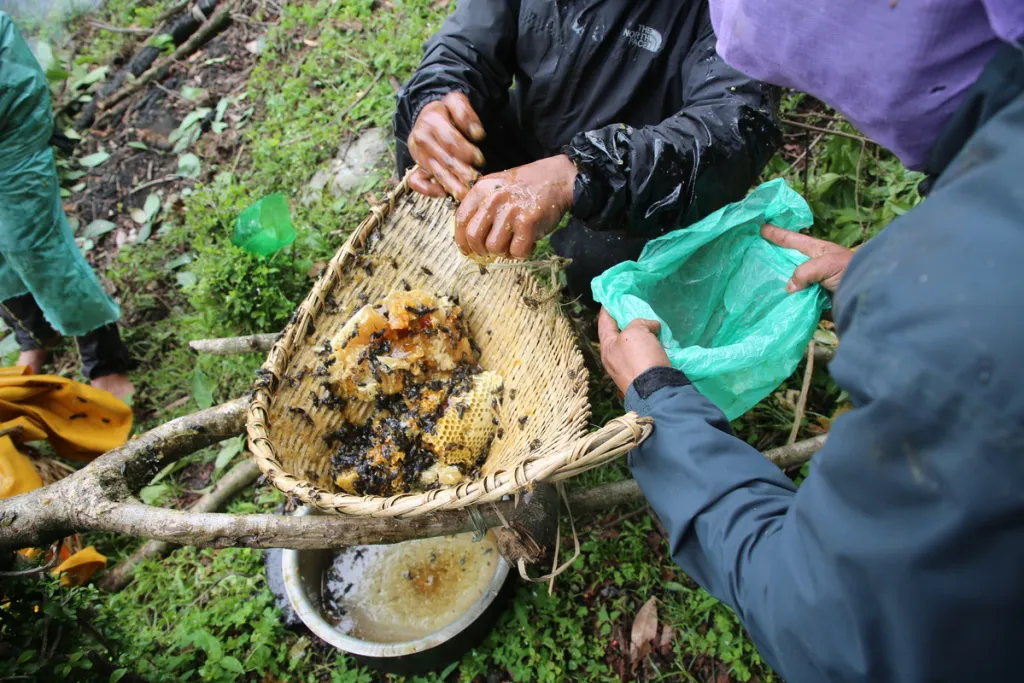
A Himalayan honey hunter wearing a red beanie and plaid shirt uses a long smoking pole to drive bees from a massive cliff-side honeycomb while holding a woven basket filled with harvested honeycomb chunks, suspended above a deep forested valley.

Mad honey is frequently discussed through two narrow frames: what it feels like to take too much, and whether it has genuine therapeutic uses. This 2018 review takes a wider view. It documents what mad honey has been used for across multiple cultures and regions, what actually happens when the body encounters a high dose […]

Grayanotoxin Poisoning: What Clinical Literature Documents About Mad Honey Toxicity
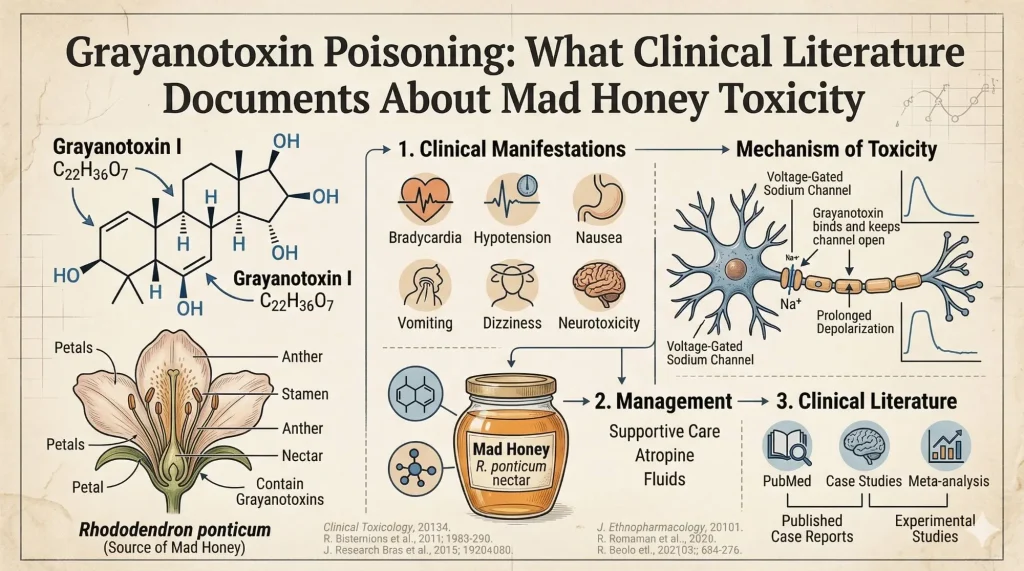
A scientific infographic illustrating grayanotoxin poisoning from mad honey, showing the chemical structure of Grayanotoxin I, an annotated Rhododendron ponticum flower diagram, clinical symptoms including bradycardia and dizziness, the sodium channel mechanism of toxicity, management options, and references to published clinical literature.

Medical disclaimer: This page summarizes published clinical literature for research and educational purposes. It is not medical advice, not a diagnosis tool, and not a substitute for emergency care. Anyone with symptoms consistent with grayanotoxin poisoning should seek medical attention promptly. The CMHI outline requires a standard safety disclaimer above the fold for this article […]