
Mad Honey Poisoning Treatment Protocol: Stepwise Clinical Management with Pharmacological Rationale
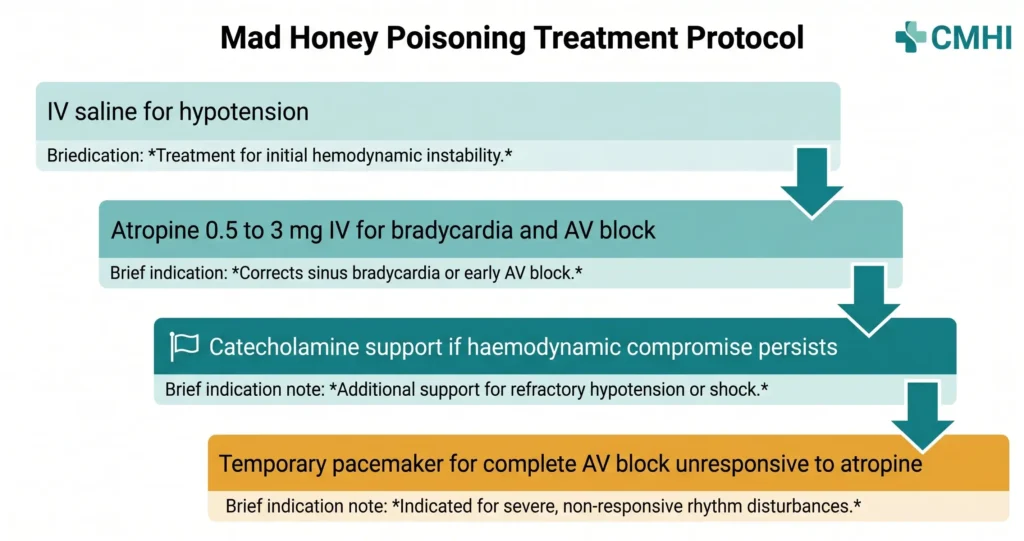
This article documents the clinical management protocol for grayanotoxin (GTX) poisoning from mad honey consumption, as established in the peer-reviewed literature, primarily Ullah et al. (2018), Jansen et al. (2012), and the case series synthesised by Salici and Atayoglu (2015). It is a reference document for emergency medicine clinicians, internal medicine physicians, cardiologists, and medical […]
Safe Mad Honey Dosage: How Much Is Too Much? An Evidence-Based Guide
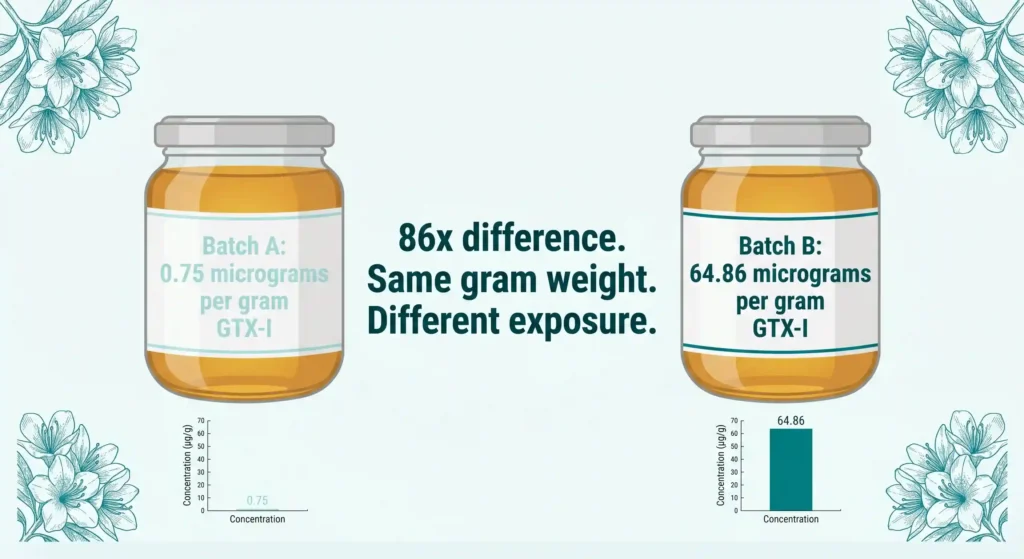
No universal safe dose of mad honey exists in the peer-reviewed literature. No controlled human dose-response study has ever been conducted. The figures that appear across clinical publications, approximately 15 to 30 grams associated with intoxication onset, one teaspoon of concentrated honey is potentially sufficient to cause poisoning, are retrospective observations from emergency case reports […]
Where to Buy Authentic Mad Honey: A Buyer’s Reference Guide
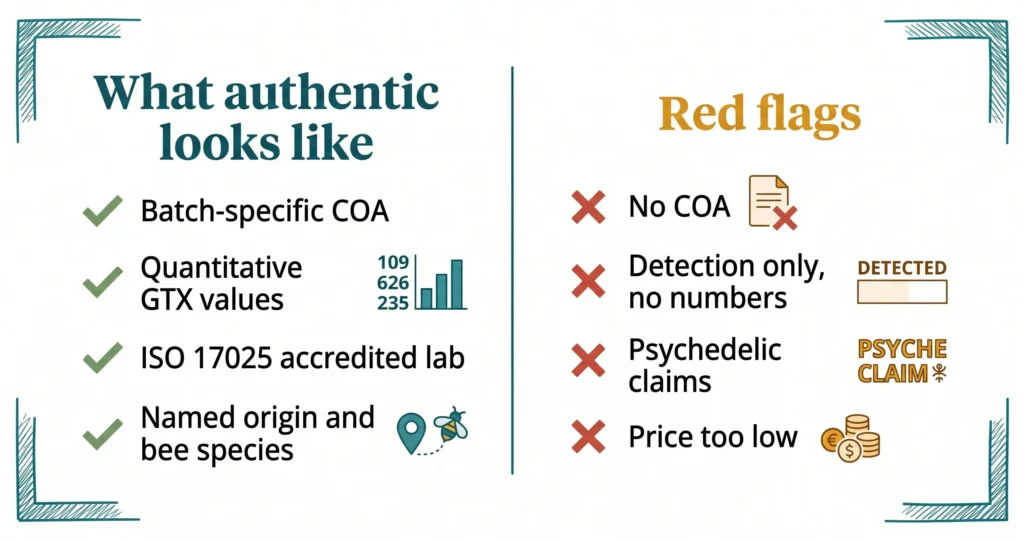
A 2022 LC-MS/MS study of 60 mad honey samples confiscated from travelers by Korean customs authorities found that 27 of them, 45 percent, contained no detectable grayanotoxin. These were samples being transported specifically as mad honey, by people who believed they were carrying an active product. The honey had been purchased, packaged, and sold as […]
The Cliff Mad Honey Safety Standard: GTX Concentration Risk Classification (v1.0)
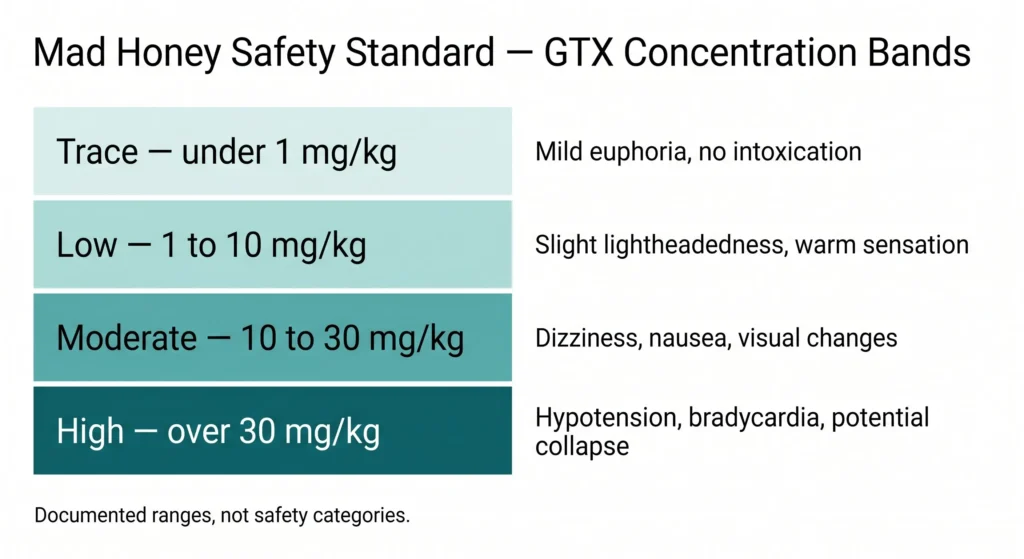
A mad honey lab report shows a single number measured in milligrams per kilogram, and a seller will often translate that into a word: low, moderate, or strong. Until now, there has been no shared, public definition of what those words actually mean. The Cliff Mad Honey Safety Standard exists to close that gap. The […]
Mad Honey and Medication Interactions: What the Research Shows
MEDICAL DISCLAIMER This page is for educational purposes only and is not medical advice. If you take any prescription or over-the-counter medications, consult a healthcare provider before consuming mad honey. If you experience symptoms after consuming mad honey while on any medication, contact Poison Control (1-800-222-1222 in the US) or emergency services. KEY TAKEAWAYS […]
Emergency Response: Recognising and Responding to Mad Honey Adverse Effects

MEDICAL DISCLAIMER IMPORTANT: If you or someone else is experiencing severe symptoms — unconsciousness, inability to stand, heart rate below 40 bpm, or difficulty breathing — call emergency services (911 in the US, 999 in the UK, 112 in Europe) immediately. Do not wait. Poison Control (US): 1-800-222-1222 (24 hours, free, confidential)UK National Poisons Information […]
How to Read a Mad Honey Lab Report (Certificate of Analysis)

MEDICAL DISCLAIMER This page is for educational purposes only and is not medical advice. A lab report does not guarantee safety. If you experience symptoms after consuming mad honey, contact Poison Control (1-800-222-1222 in the US) or emergency services immediately. KEY TAKEAWAYS A Certificate of Analysis (COA) from a mad honey vendor should report […]
Mad Honey Exposure and Tolerability: What Clinical Case Studies Report

MEDICAL DISCLAIMER This page is for educational purposes only and is not medical advice. Mad honey contains grayanotoxin, which can cause serious adverse effects, including cardiovascular events. If you experience symptoms after consuming mad honey, contact Poison Control (1-800-222-1222 in the US) or your local emergency services immediately. KEY TAKEAWAYS Published clinical literature documents […]
Grayanotoxin in Mad Honey: What the Research Says About Concentration & Safety
MEDICAL DISCLAIMER This page is for educational purposes only and is not medical advice. Mad honey contains grayanotoxin, which can cause serious adverse effects, including cardiovascular events. If you experience symptoms after consuming mad honey, contact Poison Control (1-800-222-1222 in the US) or your local emergency services immediately. KEY TAKEAWAYS Grayanotoxin (GTX) concentration in […]
Who Should Not Consume Mad Honey: Contraindications Based on Clinical Evidence
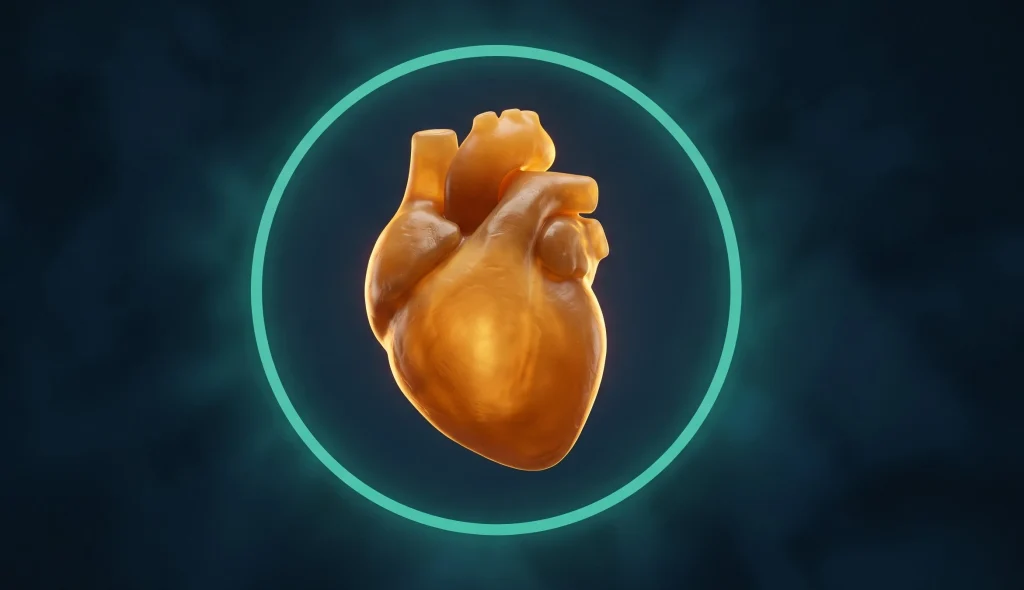
MEDICAL DISCLAIMER This page is for educational purposes only and is not medical advice. If any of the conditions below apply to you, do not consume mad honey without first consulting a qualified healthcare provider. Mad honey contains grayanotoxin, which can cause serious cardiovascular and neurological effects. Contact Poison Control (1-800-222-1222 in the US) or […]