
Mad Honey and Medication Interactions: What the Research Shows
MEDICAL DISCLAIMER This page is for educational purposes only and is not medical advice. If you take any prescription or over-the-counter medications, consult a healthcare provider before consuming mad honey. If you experience symptoms after consuming mad honey while on any medication, contact Poison Control (1-800-222-1222 in the US) or emergency services. KEY TAKEAWAYS […]
Emergency Response: Recognising and Responding to Mad Honey Adverse Effects

MEDICAL DISCLAIMER IMPORTANT: If you or someone else is experiencing severe symptoms — unconsciousness, inability to stand, heart rate below 40 bpm, or difficulty breathing — call emergency services (911 in the US, 999 in the UK, 112 in Europe) immediately. Do not wait. Poison Control (US): 1-800-222-1222 (24 hours, free, confidential)UK National Poisons Information […]
How to Read a Mad Honey Lab Report (Certificate of Analysis)

MEDICAL DISCLAIMER This page is for educational purposes only and is not medical advice. A lab report does not guarantee safety. If you experience symptoms after consuming mad honey, contact Poison Control (1-800-222-1222 in the US) or emergency services immediately. KEY TAKEAWAYS A Certificate of Analysis (COA) from a mad honey vendor should report […]
Mad Honey Exposure and Tolerability: What Clinical Case Studies Report

MEDICAL DISCLAIMER This page is for educational purposes only and is not medical advice. Mad honey contains grayanotoxin, which can cause serious adverse effects, including cardiovascular events. If you experience symptoms after consuming mad honey, contact Poison Control (1-800-222-1222 in the US) or your local emergency services immediately. KEY TAKEAWAYS Published clinical literature documents […]
Grayanotoxin in Mad Honey: What the Research Says About Concentration & Safety
MEDICAL DISCLAIMER This page is for educational purposes only and is not medical advice. Mad honey contains grayanotoxin, which can cause serious adverse effects, including cardiovascular events. If you experience symptoms after consuming mad honey, contact Poison Control (1-800-222-1222 in the US) or your local emergency services immediately. KEY TAKEAWAYS Grayanotoxin (GTX) concentration in […]
Who Should Not Consume Mad Honey: Contraindications Based on Clinical Evidence
MEDICAL DISCLAIMER This page is for educational purposes only and is not medical advice. If any of the conditions below apply to you, do not consume mad honey without first consulting a qualified healthcare provider. Mad honey contains grayanotoxin, which can cause serious cardiovascular and neurological effects. Contact Poison Control (1-800-222-1222 in the US) or […]
Mad Honey Concentration Bands: What the Numbers on a Lab Report Actually Mean
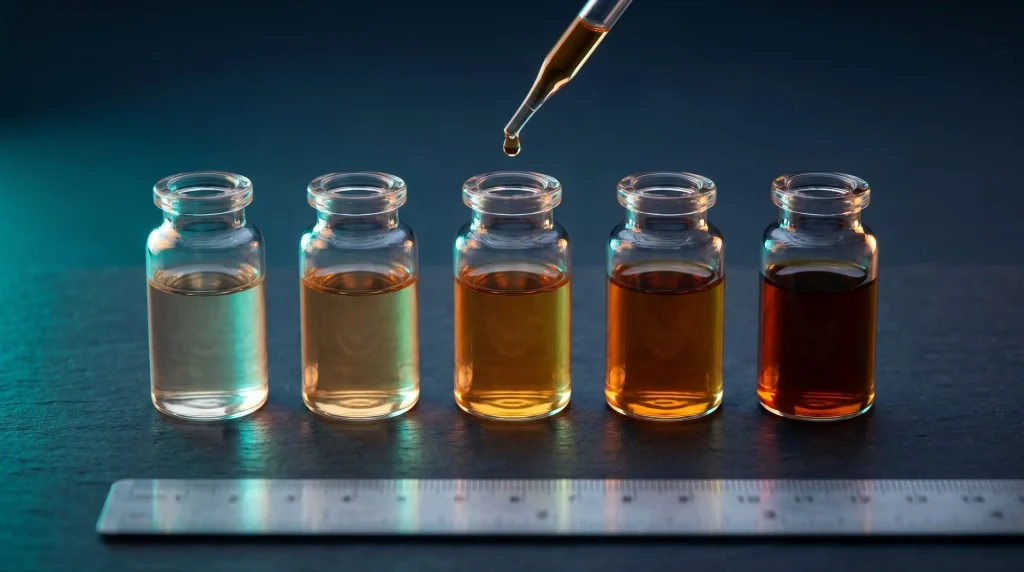
What mg/kg on a mad honey lab report actually means — how to calculate your dose, what concentration ranges appear in clinical case literature, and why the number alone is not enough.
Grayanotoxin Poisoning: What Clinical Literature Documents About Mad Honey Toxicity
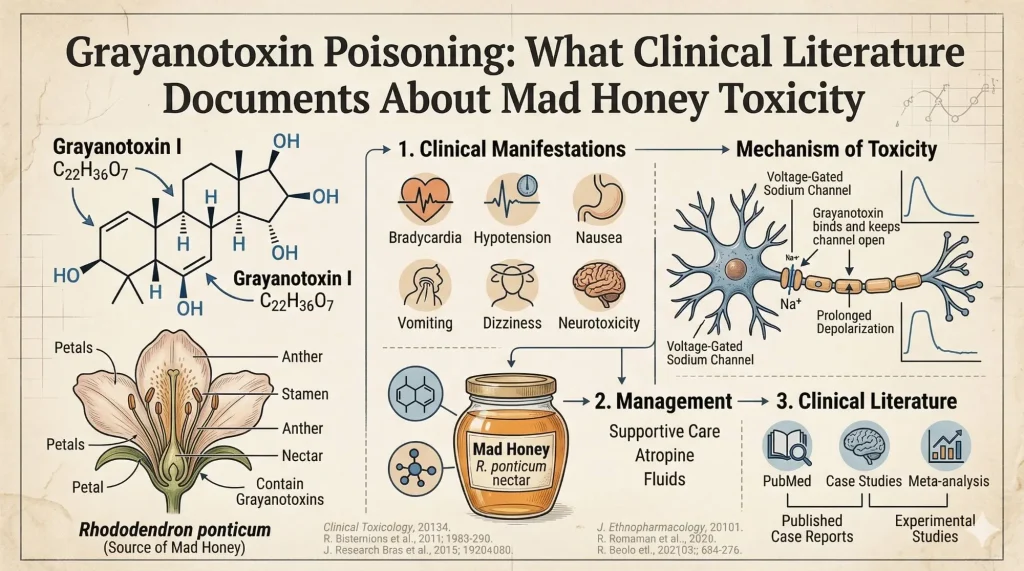
Medical disclaimer: This page summarizes published clinical literature for research and educational purposes. It is not medical advice, not a diagnosis tool, and not a substitute for emergency care. Anyone with symptoms consistent with grayanotoxin poisoning should seek medical attention promptly. The CMHI outline requires a standard safety disclaimer above the fold for this article […]
How Grayanotoxin Levels Are Measured in Mad Honey: What a 2022 LC-MS/MS Study Found About Batch Variation

Mad honey is often discussed as if it were one chemically stable product. This paper shows why that is misleading. In 2022, researchers developed and validated a liquid chromatography–tandem mass spectrometry (LC-MS/MS) method to quantify grayanotoxin I (GTX I) and grayanotoxin III (GTX III) in honey, then applied that method to 60 mad honey samples […]
The Ancient History of Mad Honey: From Warfare to Medicine

Introduction Mad Honey, with its intoxicating properties, is not a modern discovery. Its unique effects have been documented for millennia, weaving a rich tapestry of history that spans ancient warfare, traditional medicine, and even culinary curiosity. This post explores the fascinating historical journey of Mad Honey. Ancient Anatolia and the “Honey of Madness” The earliest […]