Mad Honey on the ECG: Bradycardia, AV Block, and What Clinicians See
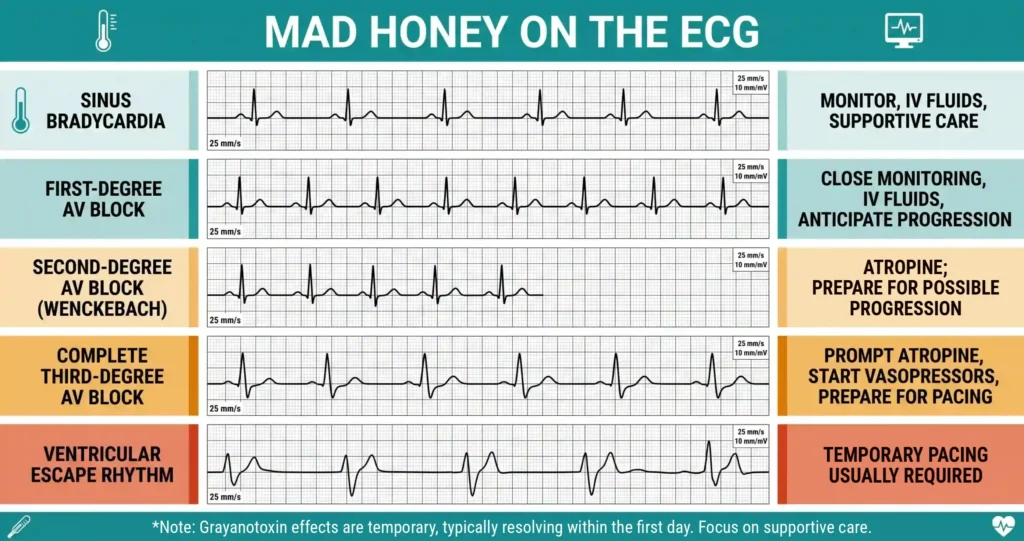
Grayanotoxin poisoning is, above all, a cardiac conduction problem. The compound holds cardiac voltage-gated sodium channels open, amplifies vagal tone, and disrupts the heart’s pacemaker and conduction system. The electrocardiogram, or ECG, is the single most informative bedside tool for assessing how severely the system has been affected, because it shows the conduction disturbance directly. […]
Mad Honey Poisoning Treatment Protocol: Stepwise Clinical Management with Pharmacological Rationale
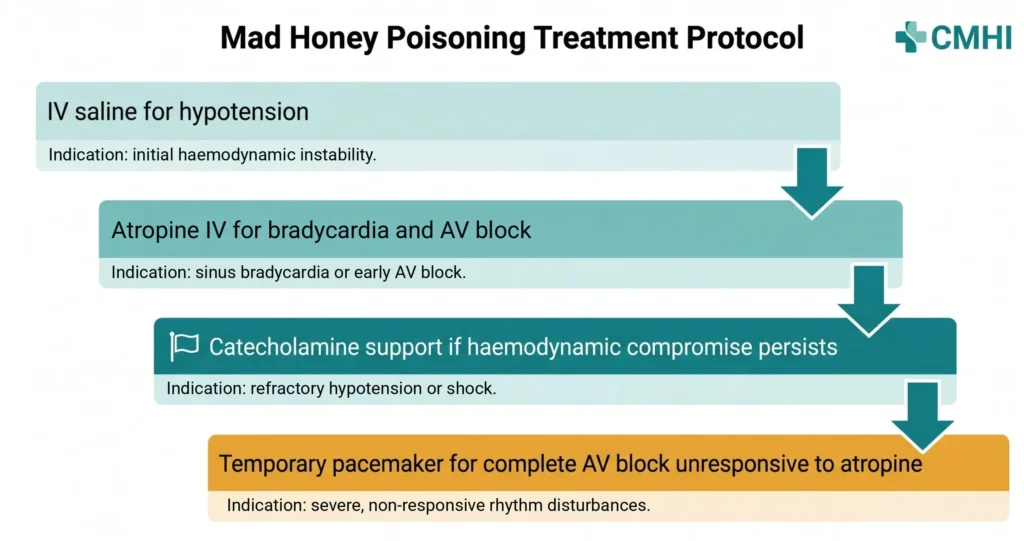
This article documents the clinical management protocol for grayanotoxin (GTX) poisoning from mad honey consumption, as established in the peer-reviewed literature, primarily Ullah et al. (2018), Jansen et al. (2012), and the case series synthesised by Silici and Atayoglu (2015). It is a reference document for emergency medicine clinicians, internal medicine physicians, cardiologists, and medical […]
Grayanotoxin LD50: Lethal Dose Data, Route Effects, and What Animal Studies Cannot Tell You About Human Risk
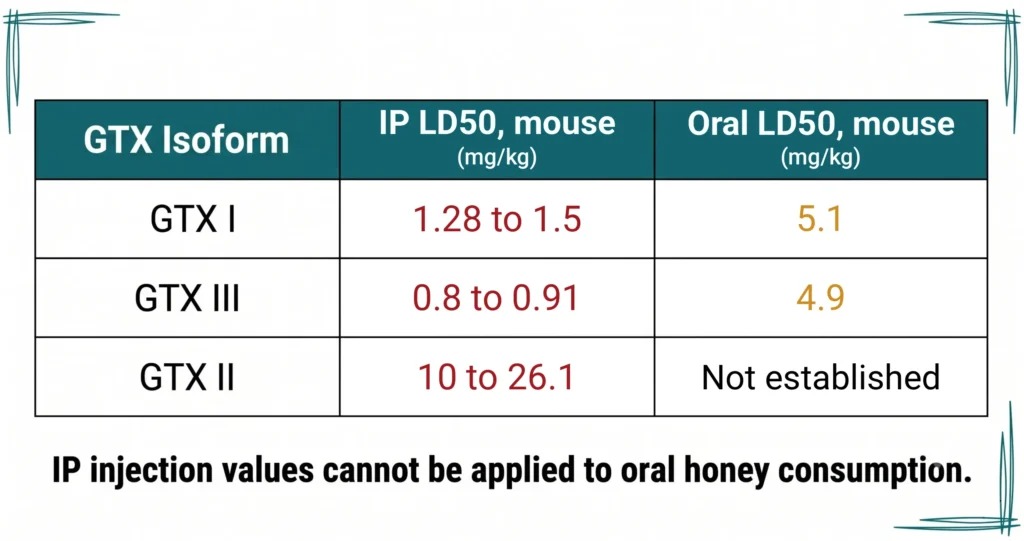
The LD50, lethal dose 50 percent, is the amount of a substance required to kill 50 percent of a test population under specified experimental conditions. It is a standard measure of acute toxicity used to compare compounds and establish hazard classifications. For grayanotoxin, published LD50 data exist in mice across several isoforms and routes of […]
Mad Honey Dosage: Why No Safe Dose Has Been Established
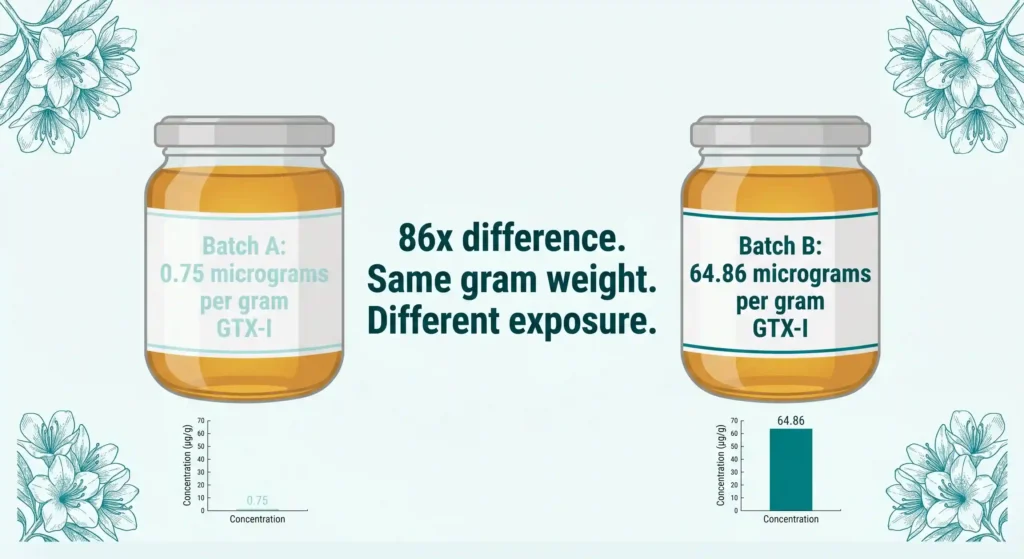
Mad honey is honey containing grayanotoxins, a family of plant toxins carried over from the nectar of certain Rhododendron species. The question of how much can be consumed without harm is the one most often asked about it, and it is the one the evidence is least able to answer. This page sets out why, […]
Buying Authentic Mad Honey: What Can Be Verified and What Cannot

Only one thing establishes how much grayanotoxin a jar of mad honey contains: a laboratory analysis of that specific batch. Nothing else does. Not the colour, not the taste, not the tingle at the back of the throat, not the price, not the photographs of rope descent, not the words raw, wild, pure, authentic, or […]
The Cliff Mad Honey Safety Standard: GTX Concentration Risk Classification (v1.0)
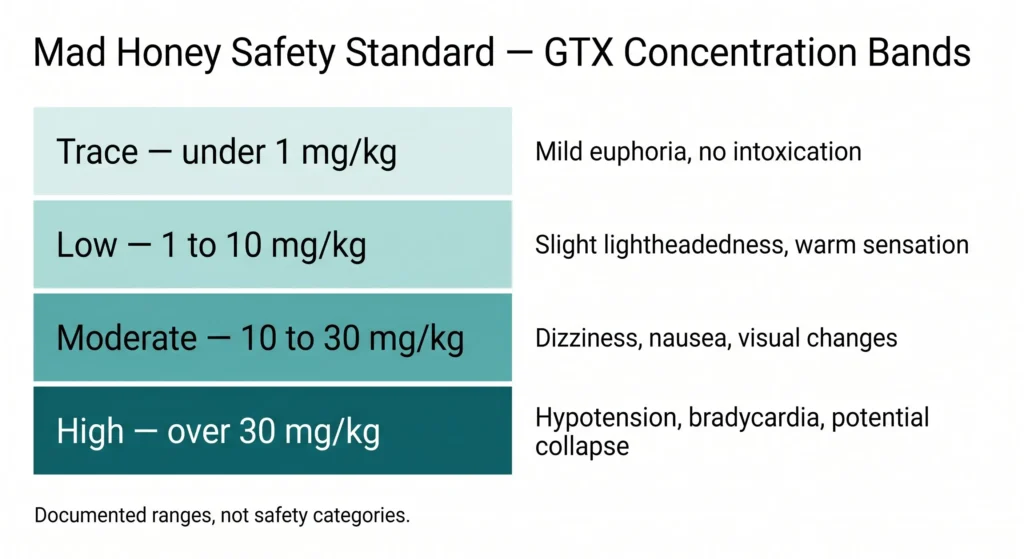
A mad honey lab report shows a single number measured in milligrams per kilogram, and a seller will often translate that into a word: low, moderate, or strong. Until now, there has been no shared, public definition of what those words actually mean. The Cliff Mad Honey Safety Standard exists to close that gap. The […]
Grayanotoxins in Mad Honey: Therapeutic Potential, Regional Comparison, and the 2025 Research Frontier
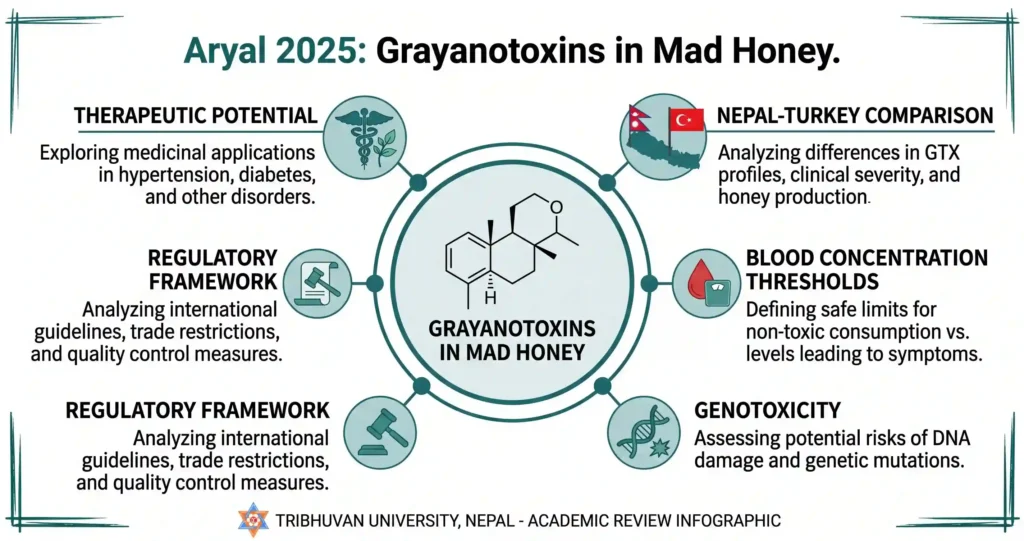
Source paper Aryal M. Grayanotoxins in Mad Honey: Mechanisms of Toxicity, Clinical Management, and Therapeutic Implications. Journal of Applied Toxicology. 2025;45(11):2240–2256. DOI: 10.1002/jat.4855. Author affiliation: Department of Chemistry, Tribhuvan University, Tri-Chandra Campus, Kathmandu, Nepal. Published 2025 by John Wiley & Sons Ltd. This 2025 review from Tribhuvan University in Kathmandu, Nepal, is the most recent […]
Mad Honey Research: What the Clinical Literature Actually Shows
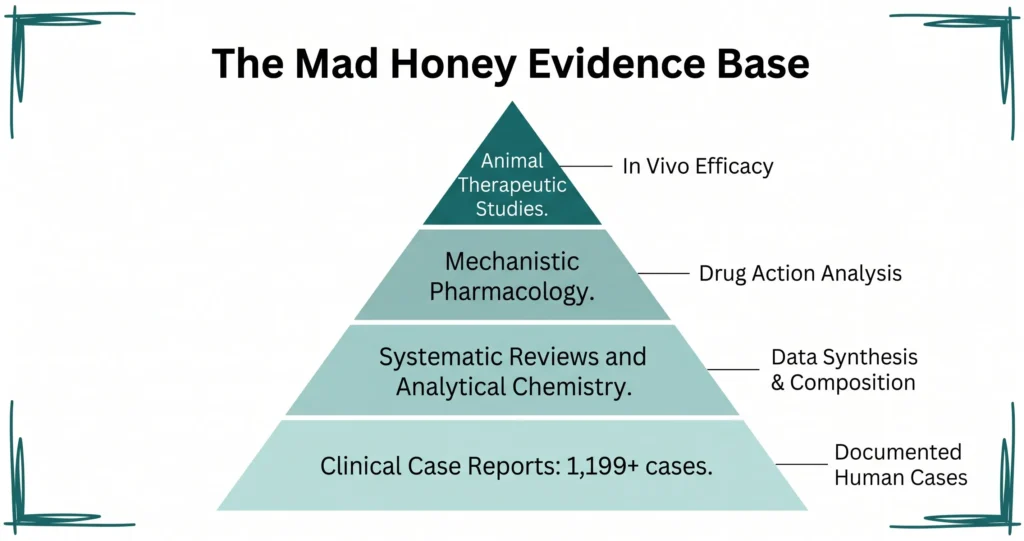
Medical disclaimer: This article is for educational purposes. It is not medical advice. The peer-reviewed literature on mad honey and grayanotoxin is substantial in some areas and essentially absent in others. That asymmetry matters for anyone trying to understand what the evidence actually supports, and it is almost never stated accurately in non-academic coverage of […]
Mad Honey Cardiovascular Effects: Bradycardia, AV Block, and Hypotension Explained
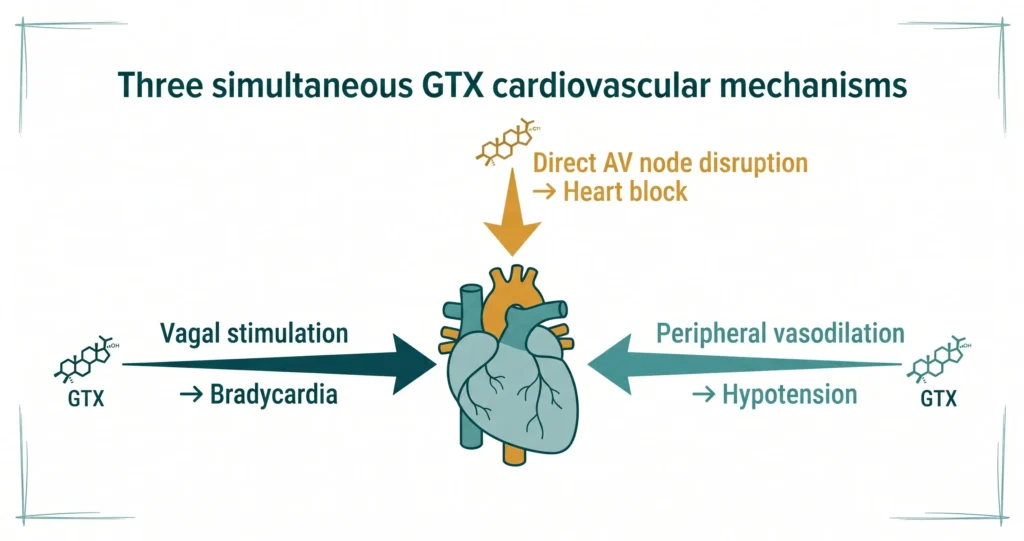
Medical disclaimer: This article is for educational purposes. It is not medical advice. Anyone experiencing bradycardia, inability to stand, or syncope after consuming mad honey should seek immediate emergency care. Mad honey’s clinical effects are predominantly cardiovascular. This is not incidental; it follows directly from the distribution of voltage-gated sodium channels and from what those […]
Mad Honey as an Alternative Treatment in Turkey’s Black Sea Region: What Ugur et al. (2019) Found

Source paper Ugur HG, Sıralı R, Tekgul AT, Efe B. Investigation of mad honey use as an alternative treatment in patients admitted to the pulmonary clinic: Ordu, Turkey example. Brazilian Archives of Biology and Technology. 2019;62:e19180488. DOI: 10.1590/1678-4324-2019180488. A descriptive questionnaire survey of 353 patients at a pulmonary disease clinic in Ordu province, carried out […]