
How Long Does Mad Honey Stay in Your System? Grayanotoxin Clearance and Half-Life
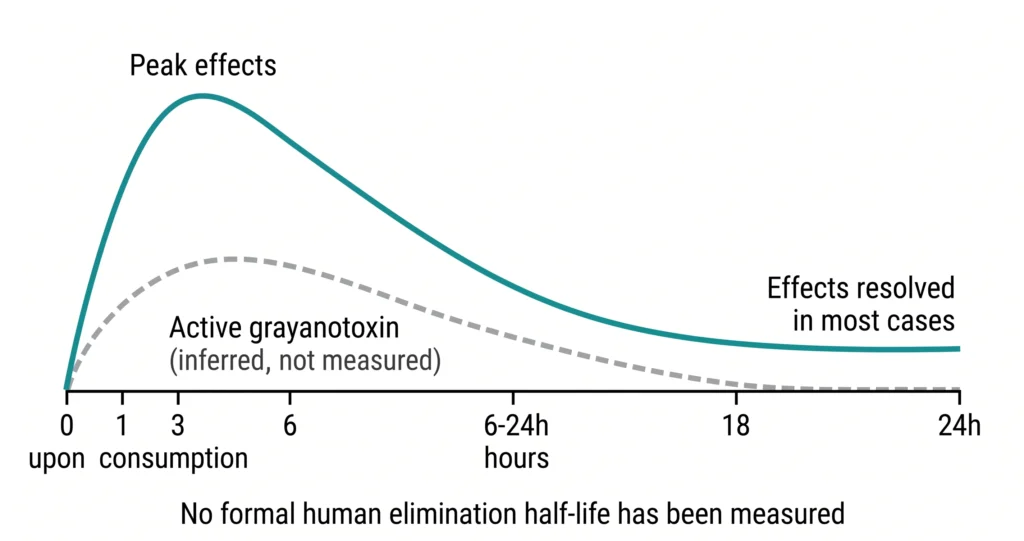
When people ask how long mad honey stays in the system, they are usually asking one of two different things that are worth separating. The first is how long the effects last, meaning the dizziness, the slowed heart rate, and the low blood pressure. The second is how long the grayanotoxin itself remains in the […]
Rhododendron Honey: The Botanical Source of Grayanotoxin and Its Relationship to Mad Honey
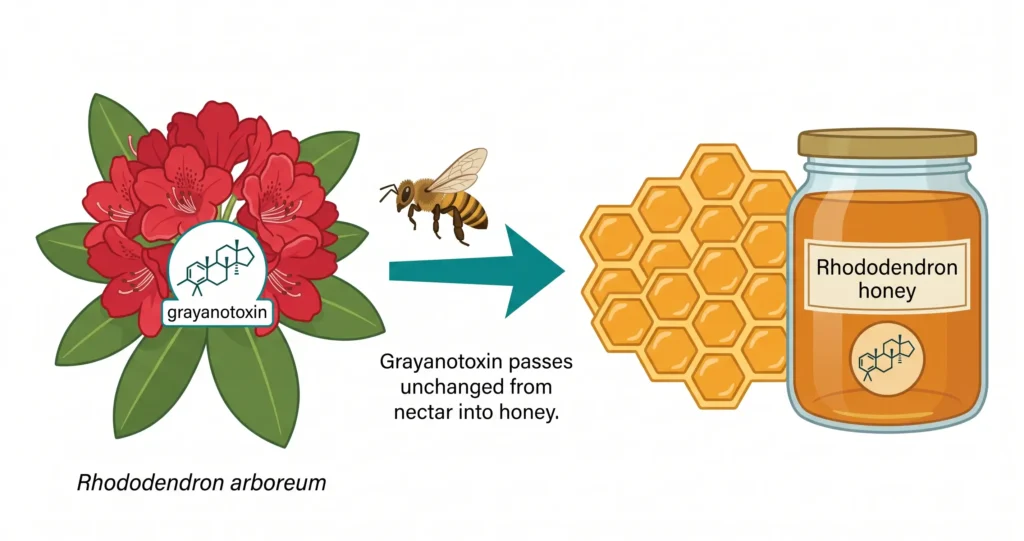
Rhododendron honey is honey produced by bees foraging predominantly on the nectar of Rhododendron flowers. It is the botanical origin of what is commonly called mad honey. When bees collect nectar from certain Rhododendron species, they transfer grayanotoxin, a compound the plant produces, into the honey. The grayanotoxin is what gives mad honey its physiological […]
Mechanism and Clinical Presentation of Mad Honey Poisoning: What Jansen et al. (2012) Established
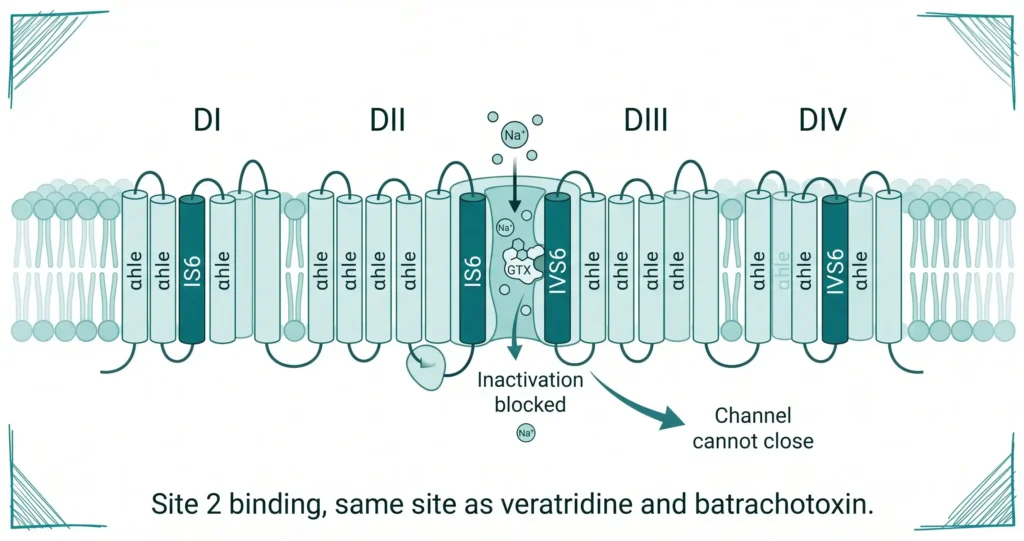
Source paper Jansen SA, Kleerekooper I, Hofman ZLM, Kappen IFPM, Stary-Weinzinger A, van der Heyden MAG. Grayanotoxin Poisoning: ‘Mad Honey Disease’ and Beyond. Cardiovascular Toxicology. 2012;12(3):208,215. DOI: 10.1007/s12012-012-9162-2. Published June 2012. Multi-institutional European authorship. The 2012 review by Jansen and colleagues, published in Cardiovascular Toxicology, is the most mechanistically detailed paper in the CMHI library […]
Grayanotoxins in Mad Honey: Therapeutic Potential, Regional Comparison, and the 2025 Research Frontier
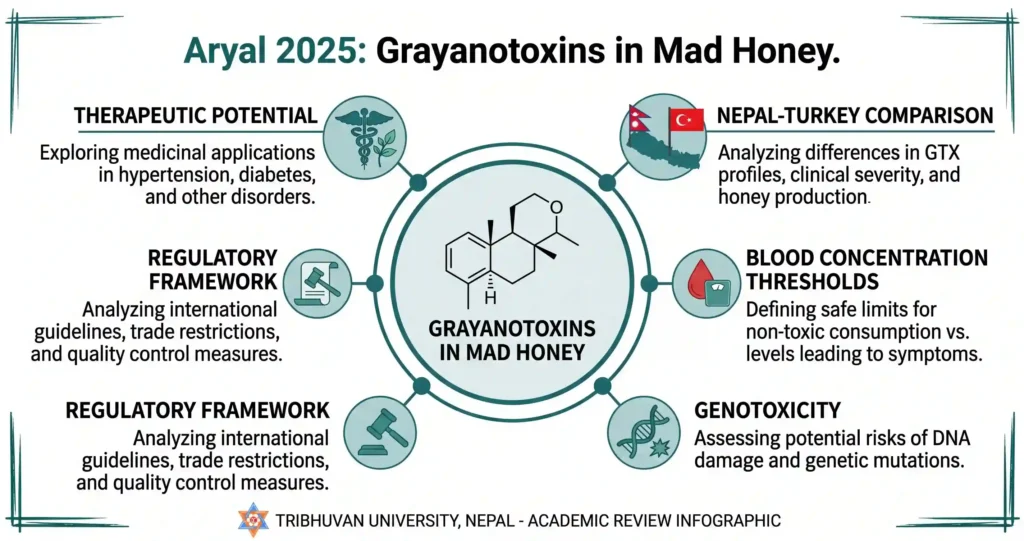
Source paper Aryal M. Grayanotoxins in Mad Honey: Mechanisms of Toxicity, Clinical Management, and Therapeutic Implications. Journal of Applied Toxicology. 2025;0:1–17. DOI: 10.1002/jat.4855. Author affiliation: Department of Chemistry, Tribhuvan University, Tri-Chandra Campus, Kathmandu, Nepal. Published 2025 by John Wiley & Sons Ltd. This 2025 review from Tribhuvan University in Kathmandu, Nepal, is the most recent […]
Mad Honey Uses, Diagnosis, and Treatment: What the Clinical Literature Documents
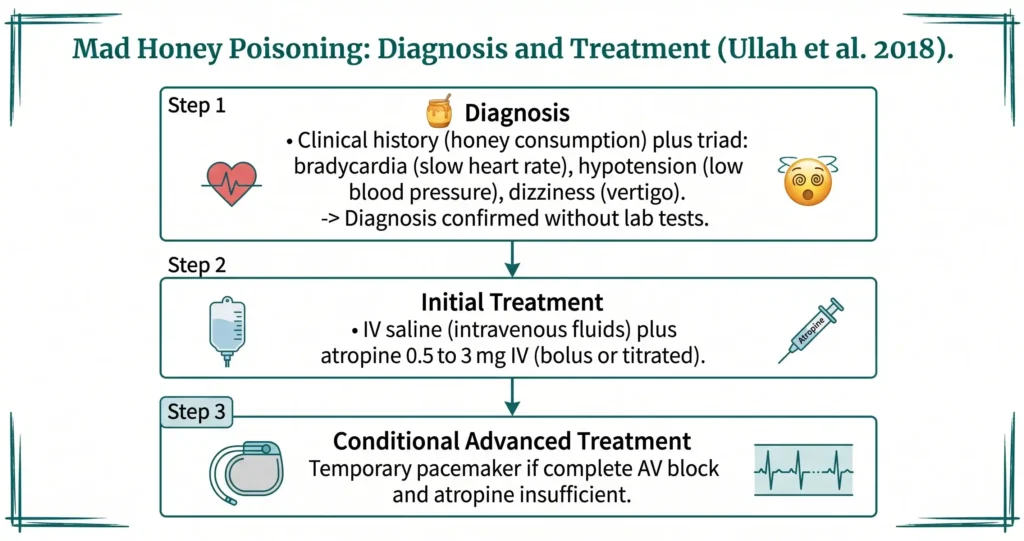
Source paper Ullah S, Khan SU, Saleh TA, Fahad S. Mad honey: uses, intoxicating/poisoning effects, diagnosis, and treatment. RSC Advances. 2018;8:18635–18646. DOI: 10.1039/c8ra01924j. This is a 2018 peer-reviewed review article published in RSC Advances (Royal Society of Chemistry), authored across Nanjing University, Huazhong Agricultural University, King Fahd University of Petroleum and Minerals, and the University […]
Grayanotoxin Batch Variation in Himalayan Mad Honey: What 60 Samples Found
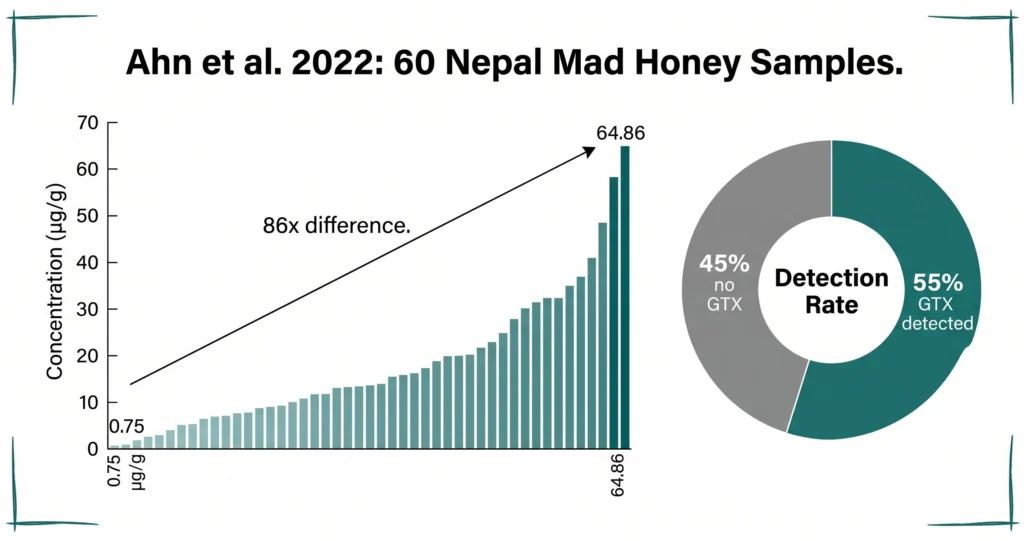
Source paper Ahn S-Y, Oh S, Woo S, Kim C-H, Kim J-H. Detection and Simultaneous Quantification of Three Grayanotoxins in Mad Honey by LC-MS/MS. Toxins. 2022;14(1):64. DOI: 10.3390/toxins14010064. Author affiliation: Korea. Published January 2022. This 2022 study from Korea is the most rigorous large-scale quantitative analysis of grayanotoxin content in Nepalese mad honey in the […]
Mad Honey Research: What the Clinical Literature Actually Shows
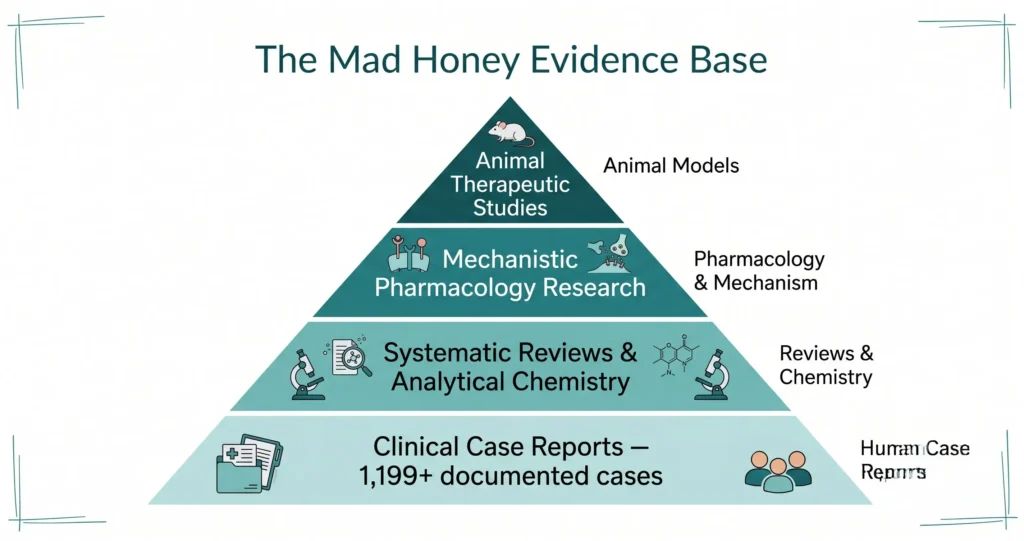
Medical disclaimer: This article is for educational purposes. It is not medical advice. The peer-reviewed literature on mad honey and grayanotoxin is substantial in some areas and essentially absent in others. That asymmetry matters for anyone trying to understand what the evidence actually supports, and it is almost never stated accurately in non-academic coverage of […]
Does Mad Honey Get You High? What the Science Says
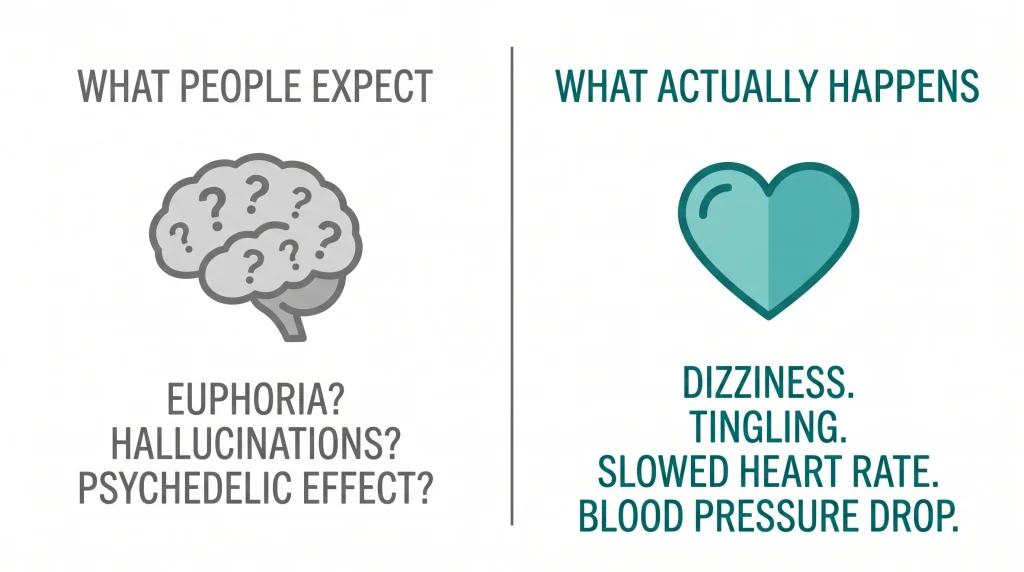
Medical disclaimer: This article is for educational purposes only. It is not medical advice. Anyone experiencing bradycardia, significant dizziness, or inability to stand after consuming mad honey should seek immediate medical attention. Straightforward answer: no, not in the way the question usually implies. Mad honey contains grayanotoxin, a compound that disrupts voltage-gated sodium channels in […]
“Hallucinogenic Honey” Explained: What the Science Actually Says
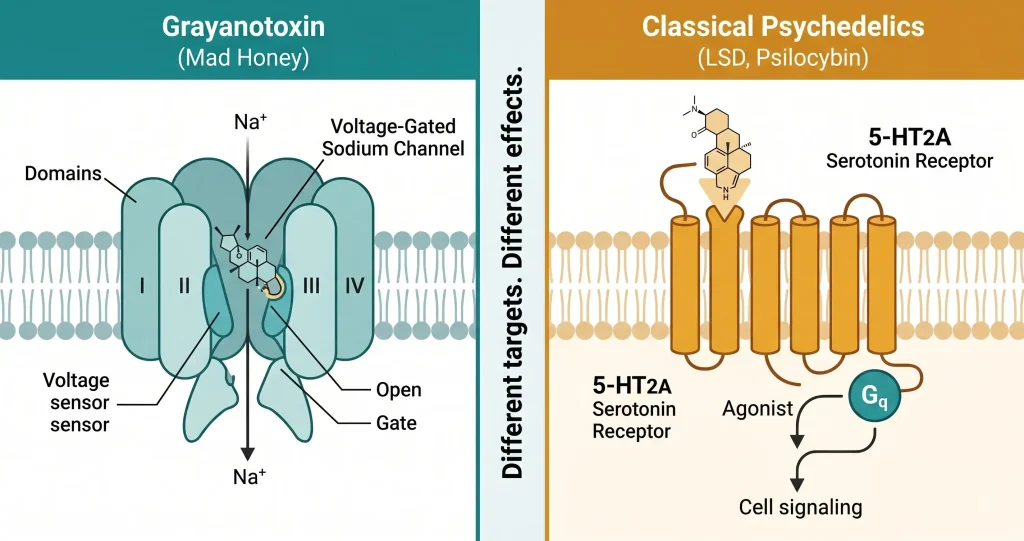
Medical disclaimer: This article is for educational purposes only. It is not medical advice and is not a substitute for emergency care. Anyone experiencing symptoms consistent with grayanotoxin poisoning should seek immediate medical attention. “Hallucinogenic honey” is one of the most searched phrases associated with mad honey. It appears in the titles of documentaries produced […]
Traditional Use of Mad Honey in Anatolian Folk Medicine: An Ethnographic Study

Ethnographic and ethnobotanical documentation of deli bal use in Anatolian communities represents an important body of knowledge that predates and runs parallel to the clinical literature on grayanotoxin poisoning. While emergency medicine case series have characterized the adverse effects of mad honey at excessive doses, the folk medicine tradition from which deli bal originates describes […]